Buzz and debate about eReaders and how it's affecting the publishing industry and the nature of reading and its community structure has been going on for a while. Most recently, Nathan Bransford has written a great post about "99-cent Kindle millionaires" (yes, it's legit), and over at The Broke and the Bookish there was a recent discussion post about HarperCollins' 26 check-out limit for e-books.
This post is part of a mini-series of blog posts in which I will talk a little about ebooks, eReaders, and their effects on the current book publishing and consuming world. Today's topic is: eBooks and the book lover.
Note the difference between a reader and a book lover. A reader (and we'll limit it to fiction, since that's 98% of what I read) likes stories. Verbal, written, slow, fast, escapist, thought-provoking--for the reader, it matters less how the story was created than what the story contains. A reader gets equal pleasure from reading a story and from hearing it. The medium in which the story is conveyed is less important than the story itself.
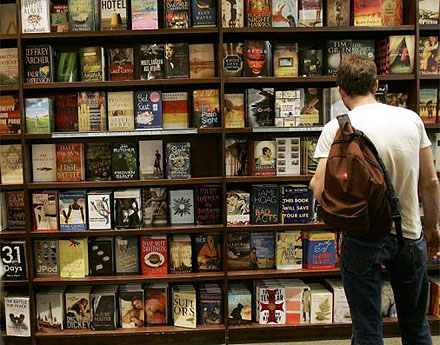 |
| artsjournal.com |
For me, a book lover as well as a reader, the issue of e-books boils down to one important question: Where do eReaders and e-books fit into my lifestyle? And my answer is equally succinct: It complements my bookworm habits. It expands the horizons of my bookworminess.
People often worry that e-books will replace p-books in the near future, and that the book publishing industry will basically collapse because the e-book format will negate the necessity of a physical publishing house and all the professionals who work therein.
I'm not sure I agree. For the true book lover, e-books will never be able to replace p-books. Notice how I didn't say "reader," because I think it's entirely possible that for someone who doesn't take note of the texture of the page under your thumb as you turn it, or the way the images and text on a book cover shift from matte to glossy and back again, e-reading can replace all the p-reading in his or her life.
 |
| librarything.com |
My eReader feeds the insatiable habit of the reader in me, but physical books can never be replaced, in my heart or on my shelves. That's the reason why books have been around for so many centuries, even while vinyl records, CDs, and videocassettes have come and gone in a matter of decades. Because the book is not merely a vehicle for the story within, but a piece of work in itself. A reader could theoretically separate the story from the book and cram all of his or her stories into one electronic device, but for the book lover, the way the story is presented is also important in a different way. Holding that work of art in your hands feels like an almost necessary milestone in the journey of being an author, in the journey of transferring one's story from one's head out to the world.
Anyway, that's just one of my thoughts about why physical books are still here to stay.What about you? What do you think of my distinction between a reader and a book lover? If you own an eReader, how do you feel that owning one has changed your view of your physical books?
Anyway, that's just one of my thoughts about why physical books are still here to stay.What about you? What do you think of my distinction between a reader and a book lover? If you own an eReader, how do you feel that owning one has changed your view of your physical books?

No comments:
Post a Comment