Tags: YA, fantasy, political intrigue, magic
Summary
Outlander Harry Crewe, new to their newly colonized homestead in Damar, feels a connection to the deserts beyond her new home…a connection that she doesn’t understand until she meets—and is taken by—the Damarian king, Corlath. For Harry is part of a prophecy that tells of a female warrior’s destiny to save Damar from their enemies. In doing so, Harry becomes a part of a culture that’s strange and mysteriously familiar at the same time, and cannot even begin to comprehend the extent to which her legacy will be imprinted on Damarian history.
Review
Well, they don’t really write high fantasy as they used to, now do they? There has to be a reason that Robin McKinley’s THE BLUE SWORD, first published in the 1980s, is still being widely read and adored, and that is because it is arguably the absolute best in its genre, an unmatched blend of strong characters, political intrigue, and quite simply the best damn fantasy world ever imagined and written.
It’s a little strange for me to read THE BLUE SWORD for the first time, nearly ten years after I picked up The Hero and the Crown and read it to pieces for about four years straight, it having been my favorite book in middle school. THE BLUE SWORD was written before The Hero and the Crown. I can hardly wrap my mind around that! The depiction of the Damarian landscape is incredible: ranging from endless red deserts to the hidden valleys and villages within the mountains. Robin McKinley’s language is not quite lyrical, per se, but there is a certain hypnotic rhythm that her descriptions possess. That, combined with the scope of the worldbuilding—the politics, myths, fashions, traditions, everyday duties—is entrancing. McKinley inspires awe in readers.
Harry, of course, serves for many as the blueprint of the admirable fantasy heroine. True, at times it feels like the mysterious magic of Damar is carrying her along, instead of her leading it. But her magnanimity, her determination to succeed even as she does not completely understand what’s happening to her, is inarguably admirable. Corlath’s appeal, I think, comes less from his specific characteristics, and more from his inexplicable status as the archetypal complement to Harry’s heroine role. However little or much we perceive of Harry and Corlath’s personalities, beliefs, or desires, however, they are a pair for whom we feel absolute sympathy.
I have little more to say because I feel like this is one of those instances where the more I try to examine what made this book move me so, the less impressed I will be by it. So I’ll just say that the scope of what it accomplishes is unparalleled, and if you read it at the right stage of life—say, on the brink of adolescence, just when you’re searching for a role model—then THE BLUE SWORD will undoubtedly become your bible of sorts.
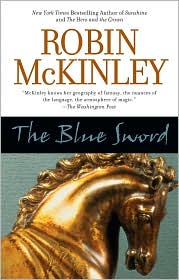
Cover discussion: McKinley's books have so many different covers each. I like the design of this edition. It's uniform and hints at epic majesty without feeling too heavy or too light.
Ace Trade / Dec. 4, 2007 / Paperback (reprint) / 320pp. / $15.00
Personal copy.
Showing posts with label fantasy. Show all posts
Saturday, May 28, 2011
Wednesday, May 18, 2011
Review: Chime by Franny Billingsley
Tags: YA, fantasy, witches
Summary
Briony Larkin is wicked. She’s had to live all 17 years of her life with the knowledge that she was responsible for her identical twin sister Rose’s brain defect and her Stepmother’s death. That’s because Briony is a witch: she can see the Old Ones, the magical creatures that live in and near the swamp, and if anyone in the Swampsea finds out that she’s a witch, then she will be hanged.
When Eldric arrives in the Swampsea, he is like a breath of fresh air in Briony’s life. Eldric makes her come alive in ways she didn’t even know she could anymore. But witches don’t love, and witches don’t cry, and if Eldric doesn’t watch out, Briony’s going to be the cause of his death.
Review
CHIME has received countless starred reviews and a nearly equal array of praise and protestation from bloggers. Suffice it to say that I went into this book with equal parts anticipation and trepidation. A book couldn’t possibly live up to all that praise, I thought. At best, I thought, I will like this book, but I won’t love it.
But oh, I loved it. Oh, how I did. CHIME completely won me over, and I am in nonstop raptures about its genius. Seriously. It might be a good thing you are not in my vicinity right now. Otherwise I’d be floating and spinning in circles around you in my enrapturement.
When I say that CHIME won me over, it really did have to win me over. The first 150 or so pages were craAaAaAaAazy! I was really confused, because the book throws us right in the middle of Briony’s narration, and she’s not exactly the most objective of narrators. She is a great example of a successful unreliable narrator, because everything she narrates is colored by her own charged perception of things.
Briony is so vehement in her self-hatred that she very nearly makes us hate her as well. A person who spends her whole life thinking that she’s wicked and hating herself will obviously have a great deal of trouble thinking otherwise. And yet Briony also has a wicked sense of humor—and by “wicked,” I mean in the best way possible. She is like a magical, irresistible combination of Anne Shirley’s whimsy and—well, I can’t think of who her wit is like, but yeah, she’s a combination of wit and whimsy, which makes her completely and utterly cool.
Briony’s narration may be confusing at first, but if you give yourself a solid chunk of time to read CHIME, by page 200 you will be so engrossed in these characters’ stories that you will not want to put this book down. Perhaps most incredible is how well we come to know and love supporting characters such as Eldric and Rose through Briony’s voice. Eldric, the boy-man with an irrepressible love of kind-hearted playing. Rose, brain-damaged but still beautifully artistic, and all the more precious for her unique and childlike take on the world. CHIME celebrates childhood and play, and suggests that the best kind of love comes from these nearly magical moments of youthfulness.
There is so much more I could say about CHIME, and so much more within this book that deserves to be talked about. But I could go on and on for pages and pages, and nothing would compare to reading this book yourself, to see if it is, too, your brand of magic. I wasn’t expecting to love CHIME, but now it’s one of my favorite books of all time, an impressive accomplishment of writing magic. Now excuse me, while I go and reread it.
Similar Authors
Dia Reeves
Melina Marchetta
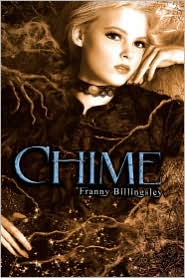
Cover discussion: This is one of my favorite covers of the year. That girl IS Briony, with her blond hair, pitch-black eyes, and angelic looks. It's so alluring and mysterious and understated sexy. I hope it draws you in as well.
Penguin / March 17, 2011 / Hardcover / 368pp. / $17.99
Review copy received through LibraryThing's Early Reviewer Program.
Summary
Briony Larkin is wicked. She’s had to live all 17 years of her life with the knowledge that she was responsible for her identical twin sister Rose’s brain defect and her Stepmother’s death. That’s because Briony is a witch: she can see the Old Ones, the magical creatures that live in and near the swamp, and if anyone in the Swampsea finds out that she’s a witch, then she will be hanged.
When Eldric arrives in the Swampsea, he is like a breath of fresh air in Briony’s life. Eldric makes her come alive in ways she didn’t even know she could anymore. But witches don’t love, and witches don’t cry, and if Eldric doesn’t watch out, Briony’s going to be the cause of his death.
Review
CHIME has received countless starred reviews and a nearly equal array of praise and protestation from bloggers. Suffice it to say that I went into this book with equal parts anticipation and trepidation. A book couldn’t possibly live up to all that praise, I thought. At best, I thought, I will like this book, but I won’t love it.
But oh, I loved it. Oh, how I did. CHIME completely won me over, and I am in nonstop raptures about its genius. Seriously. It might be a good thing you are not in my vicinity right now. Otherwise I’d be floating and spinning in circles around you in my enrapturement.
When I say that CHIME won me over, it really did have to win me over. The first 150 or so pages were craAaAaAaAazy! I was really confused, because the book throws us right in the middle of Briony’s narration, and she’s not exactly the most objective of narrators. She is a great example of a successful unreliable narrator, because everything she narrates is colored by her own charged perception of things.
Briony is so vehement in her self-hatred that she very nearly makes us hate her as well. A person who spends her whole life thinking that she’s wicked and hating herself will obviously have a great deal of trouble thinking otherwise. And yet Briony also has a wicked sense of humor—and by “wicked,” I mean in the best way possible. She is like a magical, irresistible combination of Anne Shirley’s whimsy and—well, I can’t think of who her wit is like, but yeah, she’s a combination of wit and whimsy, which makes her completely and utterly cool.
Briony’s narration may be confusing at first, but if you give yourself a solid chunk of time to read CHIME, by page 200 you will be so engrossed in these characters’ stories that you will not want to put this book down. Perhaps most incredible is how well we come to know and love supporting characters such as Eldric and Rose through Briony’s voice. Eldric, the boy-man with an irrepressible love of kind-hearted playing. Rose, brain-damaged but still beautifully artistic, and all the more precious for her unique and childlike take on the world. CHIME celebrates childhood and play, and suggests that the best kind of love comes from these nearly magical moments of youthfulness.
There is so much more I could say about CHIME, and so much more within this book that deserves to be talked about. But I could go on and on for pages and pages, and nothing would compare to reading this book yourself, to see if it is, too, your brand of magic. I wasn’t expecting to love CHIME, but now it’s one of my favorite books of all time, an impressive accomplishment of writing magic. Now excuse me, while I go and reread it.
Similar Authors
Dia Reeves
Melina Marchetta
Cover discussion: This is one of my favorite covers of the year. That girl IS Briony, with her blond hair, pitch-black eyes, and angelic looks. It's so alluring and mysterious and understated sexy. I hope it draws you in as well.
Penguin / March 17, 2011 / Hardcover / 368pp. / $17.99
Review copy received through LibraryThing's Early Reviewer Program.
Saturday, May 7, 2011
Review: The Floating Islands by Rachel Neumeier
Tags: YA, fantasy, war, magic, dragons, girls masquerading as boys, flying
Summary
The moment Trei, a newly orphaned Tolounnese and Islander half-breed, arrives on the Floating Islands to live with his uncle’s family, he is immediately drawn to the kajuraihi, men trained to ride the magicked winds that protect the Islands. As Trei trains to become a kajurai, his cousin Araenè has dreams of her own. She wants to become a chef, but Island women are only supposed to want and run their households.
Tragedy forces Araenè down a completely unexpected path: training to become a mage and learning to use magic. When war-happy Tolounne threatens the Floating Islands with new and frightening technology, Trei, Araenè, and their new respective friends find creative ways to use their new skills to help save the Islands.
Review
It’s no secret how much I love a good well-written high fantasy, one replete with intricate societal customs, political upheavel, and, of course, magic. So I was delighted when THE FLOATING ISLANDS was exactly what I wanted: a captivating and gorgeously written fantasy world.
I don’t think I have the words to describe why I loved Rachel Neumeier’s writing style so much. It’s not “purple prose-y” in that poetic, whimsical, or heartachingly beautiful way that I like in other books; instead, it’s like the perfect prose-prose, uncomplicated diction that paints an astonishingly clear picture of the setting. You see what the characters see without needing to read ten pages of minute description per scene. It’s hard to explain. It just…does the job of descriptive prose exactly right, and that’s why I call it perfect.
Araenè and Trei are wonderful protagonists with curious and unique adventures. I think Araenè will appeal to people who like reading about girls masquerading as boys to do grand things. The type of magic that she learns is fascinating and a feast for the senses, featuring glowing glass spheres, doors that don’t always lead to the same places each tiem, and flavors of spieces and herbs.
Trei’s experience as a kajurai was cool, too, if slightly less well described than Araenè mage-learning. The kajuraihi also brings us Ceirfei, Trei’s friend and fellow kajurai, who is so noble, level-headed, and admirable. Mages and kajuraihi alike contribute to the protection of the Islands in a fascinating set of tense war scenes.
All in all, as a fantasy enthusiast, I loved THE FLOATING ISLANDS. It effortlessly presents to us a different and thoroughly imaged world, yet dumbs nothing down for readers. The ending is satisfying and yet hints at the possibility of a sequel, which I would most happily welcome. Definitely a book I want to reread and that I’ll be recommending to lovers of high fantasy!
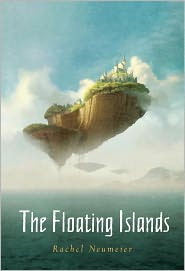
Cover discussion: I like how this illustration lends an air of epicness to the book, although I'm not sure how well it will work towards attracting its target audience. Luckily, the subtle cover image, plus the awesome synopsis, sucked me right in!
Knopf Books / Feb. 8, 2011 / Hardcover / 400pp. / $16.99
Personal copy.
Summary
The moment Trei, a newly orphaned Tolounnese and Islander half-breed, arrives on the Floating Islands to live with his uncle’s family, he is immediately drawn to the kajuraihi, men trained to ride the magicked winds that protect the Islands. As Trei trains to become a kajurai, his cousin Araenè has dreams of her own. She wants to become a chef, but Island women are only supposed to want and run their households.
Tragedy forces Araenè down a completely unexpected path: training to become a mage and learning to use magic. When war-happy Tolounne threatens the Floating Islands with new and frightening technology, Trei, Araenè, and their new respective friends find creative ways to use their new skills to help save the Islands.
Review
It’s no secret how much I love a good well-written high fantasy, one replete with intricate societal customs, political upheavel, and, of course, magic. So I was delighted when THE FLOATING ISLANDS was exactly what I wanted: a captivating and gorgeously written fantasy world.
I don’t think I have the words to describe why I loved Rachel Neumeier’s writing style so much. It’s not “purple prose-y” in that poetic, whimsical, or heartachingly beautiful way that I like in other books; instead, it’s like the perfect prose-prose, uncomplicated diction that paints an astonishingly clear picture of the setting. You see what the characters see without needing to read ten pages of minute description per scene. It’s hard to explain. It just…does the job of descriptive prose exactly right, and that’s why I call it perfect.
Araenè and Trei are wonderful protagonists with curious and unique adventures. I think Araenè will appeal to people who like reading about girls masquerading as boys to do grand things. The type of magic that she learns is fascinating and a feast for the senses, featuring glowing glass spheres, doors that don’t always lead to the same places each tiem, and flavors of spieces and herbs.
Trei’s experience as a kajurai was cool, too, if slightly less well described than Araenè mage-learning. The kajuraihi also brings us Ceirfei, Trei’s friend and fellow kajurai, who is so noble, level-headed, and admirable. Mages and kajuraihi alike contribute to the protection of the Islands in a fascinating set of tense war scenes.
All in all, as a fantasy enthusiast, I loved THE FLOATING ISLANDS. It effortlessly presents to us a different and thoroughly imaged world, yet dumbs nothing down for readers. The ending is satisfying and yet hints at the possibility of a sequel, which I would most happily welcome. Definitely a book I want to reread and that I’ll be recommending to lovers of high fantasy!
Cover discussion: I like how this illustration lends an air of epicness to the book, although I'm not sure how well it will work towards attracting its target audience. Luckily, the subtle cover image, plus the awesome synopsis, sucked me right in!
Knopf Books / Feb. 8, 2011 / Hardcover / 400pp. / $16.99
Personal copy.
Friday, April 22, 2011
Review & Interview: Huntress by Malinda Lo
Tags: YA, fantasy, fey, romance, LGBT
Summary
Taisin’s vision leads her and her classmate, Kaede, to accompany their kingdom’s prince, Con, on a journey to visit the Fairy Queen in her faraway city of Taninli. A strange winter has settled over the kingdom, people are starving, and unrest is brewing. They believe that the Queen may have answers to their kingdom’s perils.
But the journey to Taninli and beyond is a dangerous one. As they encounter mysterious magical creatures, Taisin and Kaede also attempt to fight their attraction to one another. Love has no place, either on this journey or in their lives: Taisin must take a vow of celibacy if she is to achieve her lifelong dream of being a Sage, and Kaede’s father wants to arrange a political marriage for her. But the connection they fight may be just the thing that might save them when they finally learn what they are facing.
Review
Malinda Lo’s beautifully written debut novel, Ash, was one of my favorite books of 2009, and I awaited the release of HUNTRESS with trembling anticipation. HUNTRESS turned out a little differently than I had hoped, but it was still a book that had me reading with bated breath and tearing up at the end.
The strongest part of HUNTRESS is, in my opinion, the romance between Taisin and Kaede. Their romance starts out hesitatingly: both girls are scared to acknowledge their growing feelings for each other. As the story progresses, however, their romance blossoms into an innocent and utterly beautiful thing, what they aptly describe as a warm gift in the middle of all their danger and worry. Taisin and Kaede’s relationship really makes you believe in the power of love without taking it over the edge and into unbelievability.
HUNTRESS is told in a sort of old-fashioned fairy tale narrative style, which employs omniscient third-person narration. The constant shift in point of view may be a bit jarring, but it’s not wrong, especially considering the fact that books written in the nineteenth century used this literary technique all the time. However, I think it did contribute to my feeling of distance from most of the characters. I wanted more from all the characters: the constant switches in POV made it so that there didn’t seem to be a particular main character, and as a result everyone felt like a supporting character, with the potential for but not the actuality of depth.
Overall, however, HUNTRESS was a wonder-inducing fantasy read that spans time and distance. Don’t miss it particularly if you were a fan of Ash.
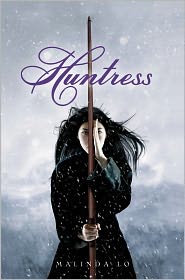
Cover discussion: Um, LOVE, obviously. Asian girl on a YA cover? So badass.
Little, Brown / April 5, 2011 / Hardcover / 384pp. / $17.99
Received from publisher for review.
Interview with Malinda Lo
1. What was your favorite (non-spoilery) scene in HUNTRESS?
Hmm, how will I answer this? I'm afraid that all my favorite scenes are super spoilery! They're turning points in the plot, which is probably why they are my favorite. Those scenes have to be filled with a lot of emotion and there has to be a major realization or bang at the end of them.
So, I'll list some page numbers if anybody has a copy of the book and wants to flip through it to find out. I especially enjoyed working on the scenes on pages 134-139, 250-255, 296-300, and 359-362.
2. What are some of your favorite fictional lesbian romances?
I love the romance between Nan and [name redacted due to spoiler!] in Tipping the Velvet by Sarah Waters. I know that doesn't really say much, but Nan has a number of romances, and I'll just say that my favorite of hers is not the first one she experiences. I also really enjoyed the romance between Loup and Pilar in Santa Olivia by Jacqueline Carey, which is a sexy dystopian about a genetically modified teen girl who grows up to be a boxer.
Neither of these books is YA, although Tipping begins when Nan is 18, and Santa Olivia ends when Loup is 18, so they're both about young women and coming of age.
3. What is the most difficult part of the writing process for you?
Every stage of writing has its difficult aspects, each unique to the stage, and honestly the most difficult part varies with each book. With Huntress, the middle of the second (or was it third?) draft was the most difficult for me; it felt like slogging through mud at times.
Here are some other parts of the writing process that have been difficult for me:
* The outline, because I just hate writing outlines, but my publisher requires them.
* The first draft, because I don't know exactly who the characters are yet.
* The second draft, because I'm now working with revision notes from my editor, and I'm trying to make the book *mean* something.
* The third draft, because now my editor is doing line-editing and asking me a bunch of specific questions that I have to actually answer.
* The final draft, because OMG it's the FINAL DRAFT and after this it will be FINISHED, so what if it totally sucks?! (panic)
The part that I love the most? Copyediting. It satisfies some deep-seated need in me to make sure all the punctuation is correct, and have extremely nitpicky discussions with the copyeditor in the margins over proper word usage.
4. What is your favorite meal of the day, and what would it ideally consist of?
I love EVERY meal of the day, but if I had to pick only one meal, I would choose brunch because it basically incorporates all the meals (ha!) and allows you have a beautiful array of beverages, too.
Here is a brunch menu I would die for:
Strong Irish breakfast tea made in the proper way with fresh boiling water!
Southern-style biscuits with sausage gravy
Fresh, in-season fruit and Greek yogurt
A side of buttermilk pancakes with maple syrup (why not?)
A spicy bloody mary
Then I'd need to go take a nap for about 3 hours.
5. Do you have any particular writing superstitions or quirky writing habits?
Yes. To begin with, every morning that I'm drafting or revising fiction, I set Mac Freedom until noon. That program disables the internet on my computer. :) (I use it again in the afternoon.)
Then I usually meditate for about 15 minutes. I have a meditation cushion in my office and I time myself with my ipod touch timer (bells ring at the end of the 15 minutes). I usually do vipassana meditation, which essentially is "just sitting." If I'm too antsy to just sit, I might count my breaths from 1 to 10 and then repeat that cyclically to keep myself focused on the breath. Sometimes I will do a loving-kindness meditation or a body scan.
After meditation, I get to work. I've noticed that if I don't meditate, it can be a lot harder for me to concentrate at first. Sometimes I just don't want to meditate (who knows why), but I try to make myself do it anyway, because it really helps.
Thank you for answering my questions, Malinda! Isn't she fantastic? You should definitely check out ASH and HUNTRESS if you haven't yet. Check out the rest of Malinda's blog tour below (organized by Ames--thank you!):
Summary
Taisin’s vision leads her and her classmate, Kaede, to accompany their kingdom’s prince, Con, on a journey to visit the Fairy Queen in her faraway city of Taninli. A strange winter has settled over the kingdom, people are starving, and unrest is brewing. They believe that the Queen may have answers to their kingdom’s perils.
But the journey to Taninli and beyond is a dangerous one. As they encounter mysterious magical creatures, Taisin and Kaede also attempt to fight their attraction to one another. Love has no place, either on this journey or in their lives: Taisin must take a vow of celibacy if she is to achieve her lifelong dream of being a Sage, and Kaede’s father wants to arrange a political marriage for her. But the connection they fight may be just the thing that might save them when they finally learn what they are facing.
Review
Malinda Lo’s beautifully written debut novel, Ash, was one of my favorite books of 2009, and I awaited the release of HUNTRESS with trembling anticipation. HUNTRESS turned out a little differently than I had hoped, but it was still a book that had me reading with bated breath and tearing up at the end.
The strongest part of HUNTRESS is, in my opinion, the romance between Taisin and Kaede. Their romance starts out hesitatingly: both girls are scared to acknowledge their growing feelings for each other. As the story progresses, however, their romance blossoms into an innocent and utterly beautiful thing, what they aptly describe as a warm gift in the middle of all their danger and worry. Taisin and Kaede’s relationship really makes you believe in the power of love without taking it over the edge and into unbelievability.
HUNTRESS is told in a sort of old-fashioned fairy tale narrative style, which employs omniscient third-person narration. The constant shift in point of view may be a bit jarring, but it’s not wrong, especially considering the fact that books written in the nineteenth century used this literary technique all the time. However, I think it did contribute to my feeling of distance from most of the characters. I wanted more from all the characters: the constant switches in POV made it so that there didn’t seem to be a particular main character, and as a result everyone felt like a supporting character, with the potential for but not the actuality of depth.
Overall, however, HUNTRESS was a wonder-inducing fantasy read that spans time and distance. Don’t miss it particularly if you were a fan of Ash.
Cover discussion: Um, LOVE, obviously. Asian girl on a YA cover? So badass.
Little, Brown / April 5, 2011 / Hardcover / 384pp. / $17.99
Received from publisher for review.
Interview with Malinda Lo
1. What was your favorite (non-spoilery) scene in HUNTRESS?
Hmm, how will I answer this? I'm afraid that all my favorite scenes are super spoilery! They're turning points in the plot, which is probably why they are my favorite. Those scenes have to be filled with a lot of emotion and there has to be a major realization or bang at the end of them.
So, I'll list some page numbers if anybody has a copy of the book and wants to flip through it to find out. I especially enjoyed working on the scenes on pages 134-139, 250-255, 296-300, and 359-362.
2. What are some of your favorite fictional lesbian romances?
I love the romance between Nan and [name redacted due to spoiler!] in Tipping the Velvet by Sarah Waters. I know that doesn't really say much, but Nan has a number of romances, and I'll just say that my favorite of hers is not the first one she experiences. I also really enjoyed the romance between Loup and Pilar in Santa Olivia by Jacqueline Carey, which is a sexy dystopian about a genetically modified teen girl who grows up to be a boxer.
Neither of these books is YA, although Tipping begins when Nan is 18, and Santa Olivia ends when Loup is 18, so they're both about young women and coming of age.
3. What is the most difficult part of the writing process for you?
Every stage of writing has its difficult aspects, each unique to the stage, and honestly the most difficult part varies with each book. With Huntress, the middle of the second (or was it third?) draft was the most difficult for me; it felt like slogging through mud at times.
Here are some other parts of the writing process that have been difficult for me:
* The outline, because I just hate writing outlines, but my publisher requires them.
* The first draft, because I don't know exactly who the characters are yet.
* The second draft, because I'm now working with revision notes from my editor, and I'm trying to make the book *mean* something.
* The third draft, because now my editor is doing line-editing and asking me a bunch of specific questions that I have to actually answer.
* The final draft, because OMG it's the FINAL DRAFT and after this it will be FINISHED, so what if it totally sucks?! (panic)
The part that I love the most? Copyediting. It satisfies some deep-seated need in me to make sure all the punctuation is correct, and have extremely nitpicky discussions with the copyeditor in the margins over proper word usage.
4. What is your favorite meal of the day, and what would it ideally consist of?
I love EVERY meal of the day, but if I had to pick only one meal, I would choose brunch because it basically incorporates all the meals (ha!) and allows you have a beautiful array of beverages, too.
Here is a brunch menu I would die for:
Strong Irish breakfast tea made in the proper way with fresh boiling water!
Southern-style biscuits with sausage gravy
Fresh, in-season fruit and Greek yogurt
A side of buttermilk pancakes with maple syrup (why not?)
A spicy bloody mary
Then I'd need to go take a nap for about 3 hours.
5. Do you have any particular writing superstitions or quirky writing habits?
Yes. To begin with, every morning that I'm drafting or revising fiction, I set Mac Freedom until noon. That program disables the internet on my computer. :) (I use it again in the afternoon.)
Then I usually meditate for about 15 minutes. I have a meditation cushion in my office and I time myself with my ipod touch timer (bells ring at the end of the 15 minutes). I usually do vipassana meditation, which essentially is "just sitting." If I'm too antsy to just sit, I might count my breaths from 1 to 10 and then repeat that cyclically to keep myself focused on the breath. Sometimes I will do a loving-kindness meditation or a body scan.
After meditation, I get to work. I've noticed that if I don't meditate, it can be a lot harder for me to concentrate at first. Sometimes I just don't want to meditate (who knows why), but I try to make myself do it anyway, because it really helps.
Thank you for answering my questions, Malinda! Isn't she fantastic? You should definitely check out ASH and HUNTRESS if you haven't yet. Check out the rest of Malinda's blog tour below (organized by Ames--thank you!):
Monday, 4/18 – The Naughty Book Kitties
Tuesday, 4/19 – Manga Maniac Cafe
Wednesday, 4/20 – Mundie Moms
Thursday, 4/21 – Ellz Readz
Friday, 4/22 – Steph Su Reads
Monday, 4/25 – Bibliophilic Book Blog
Tuesday, 4/26 – Reading in Color
Thursday, April 21, 2011
Review & Interview: The Iron Thorn by Caitlin Kittredge
Tags: YA, steampunk, urban fantasy, madness, dystopian, faeries
Summary
On her upcoming sixteenth birthday, Aoife Grayson is going to go mad. That’s what happened to her mother and her older brother, Conrad, a rare, genetic version of the necrovirus that spreads through their aether-run, Proctor-controlled city of Lovecraft, Massachusetts. Now, her mother is in a madhouse, and her brother has escaped the city. But when Conrad sends an SOS to Aoife, she and her best friend Cal enlist the help of Dean, a street-smart heretic, to help her get to her father’s house in Arkham.
In between avoiding capture by the Proctors, Aoife discovers a shocking secret about the world she knows: nothing is the way it seems, and magic may be more rampant than she ever believed.
Review
THE IRON THORN has its fair share of logistical worldbuilding inconsistencies, but should still be one heck of an adventure for younger, avid readers.
The steampunkish city of Lovecraft exists in alternate-world 1950s, which is always risky and ambitious, because it involves really thorough worldbuilding, and I’m not sure THE IRON THORN really thoroughly accomplishes that. It’s less steampunk than it is a creepy sort of urban fantasy, with the threat of dangerous fey creatures driving the second half of the story. I never entirely felt like the Proctors were frightening, because their appearances throughout the story were so sporadic: it should’ve been much harder for Aoife and her friends to escape Lovecraft, and I never fully got the sense that the Proctors were on her tail, watching her every move.
In addition to worldbuilding inconsistencies, the characters felt a little…off as well. What, exactly, is so endearing about Dean constantly calling Aoife “princess” and remarking on her apparent beauty? It’s creepy. It deserves a slapping. Multiple slappings. And an unexpected twist regarding Cal at the end of the story was the breaking point for me in what was an increasing number of poorly explained “twists.” It felt like an unsuccessful attempt to justify his bratty, bad-friend behavior in the previous 400 pages. It was almost like the story couldn’t decide what it wanted to be—a steampunk? an urban fantasy?—and so it tried to incorporate a bit of everything, with the result that some elements of the story felt a little short.
Nevertheless, Aoife is an admirable protagonist. She’s extremely motivated and determined, and therefore a delight to follow around. She is someone who you could really see accomplishing everything on her own: she just happens to attract the support of friends through her determination.
THE IRON THORN is ambitious, sprawling, and epic. I nitpicked a lot while I was reading because I wanted MORE, but there already is a lot going on in this novel that is impressive and engaging. Recommend it as a gift especially to younger, avid readers who enjoy sprawling adventures.
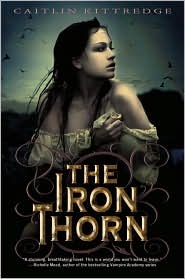
Cover discussion: It's pretty cool! I think it's a good depiction of Aoife's toughness, as well as the eeriness that seems to permeate Aoife's world.
Random House / Feb. 22, 2011 / Hardcover / 512pp. / $17.99
Sent by publisher for review.
Interview with Caitlin Kittredge
1. Tell us some things that readers will find in The Iron Thorn that aren't mentioned in the synopsis.
An amazing clockwork house, an underground city full of ghouls, an airship crash, a full-on makeout scene—I could go on, but there'd be spoilers!
2. Aoife is an unusual name. How is it pronounced, and how did you decide upon giving your protagonist this name?
It's pronounced Ee-fah, and it's a traditional Irish name. I went to kindergarten with an Aoife, actually, and the name stuck with me, so I decided to give it to my first YA heroine.
3. What would you consider the most interesting writing project you've worked on so far?
Definitely this one. It was amazing to create a whole alternate history from scratch, and use the Lovecraft Mythos twined with actual events such as the Red Scare.
4. If you could travel back to any period in time, where would you go and why?
Assuming I didn't have to stay? And could go home and take my corset off? The Victorian era. It was a time of amazing discovery, innovation, and exploration. Plus, I could visit Meiji Japan and the American West, two of my favorite places during that time period.
5. What do you usually do whenever you need a good laugh?
I look at people and cats being silly on the internet.
6. If you could dye your hair any color you want without any negative consequences, what color would you choose?
Oh, I've dyed it all the colors, sometimes with very negative consequences. I'm naturally brunette. I've been red, black, blond, blue, green, purple, pink and some weird orange tone that we don't discuss.
-
Thanks for stopping by my blog today, Caitlin! Check out Caitlin's author website if you're interested in learning more about The Iron Thorn or her other books. And thank you Dominique for putting together this blog tour!
Summary
On her upcoming sixteenth birthday, Aoife Grayson is going to go mad. That’s what happened to her mother and her older brother, Conrad, a rare, genetic version of the necrovirus that spreads through their aether-run, Proctor-controlled city of Lovecraft, Massachusetts. Now, her mother is in a madhouse, and her brother has escaped the city. But when Conrad sends an SOS to Aoife, she and her best friend Cal enlist the help of Dean, a street-smart heretic, to help her get to her father’s house in Arkham.
In between avoiding capture by the Proctors, Aoife discovers a shocking secret about the world she knows: nothing is the way it seems, and magic may be more rampant than she ever believed.
Review
THE IRON THORN has its fair share of logistical worldbuilding inconsistencies, but should still be one heck of an adventure for younger, avid readers.
The steampunkish city of Lovecraft exists in alternate-world 1950s, which is always risky and ambitious, because it involves really thorough worldbuilding, and I’m not sure THE IRON THORN really thoroughly accomplishes that. It’s less steampunk than it is a creepy sort of urban fantasy, with the threat of dangerous fey creatures driving the second half of the story. I never entirely felt like the Proctors were frightening, because their appearances throughout the story were so sporadic: it should’ve been much harder for Aoife and her friends to escape Lovecraft, and I never fully got the sense that the Proctors were on her tail, watching her every move.
In addition to worldbuilding inconsistencies, the characters felt a little…off as well. What, exactly, is so endearing about Dean constantly calling Aoife “princess” and remarking on her apparent beauty? It’s creepy. It deserves a slapping. Multiple slappings. And an unexpected twist regarding Cal at the end of the story was the breaking point for me in what was an increasing number of poorly explained “twists.” It felt like an unsuccessful attempt to justify his bratty, bad-friend behavior in the previous 400 pages. It was almost like the story couldn’t decide what it wanted to be—a steampunk? an urban fantasy?—and so it tried to incorporate a bit of everything, with the result that some elements of the story felt a little short.
Nevertheless, Aoife is an admirable protagonist. She’s extremely motivated and determined, and therefore a delight to follow around. She is someone who you could really see accomplishing everything on her own: she just happens to attract the support of friends through her determination.
THE IRON THORN is ambitious, sprawling, and epic. I nitpicked a lot while I was reading because I wanted MORE, but there already is a lot going on in this novel that is impressive and engaging. Recommend it as a gift especially to younger, avid readers who enjoy sprawling adventures.
Cover discussion: It's pretty cool! I think it's a good depiction of Aoife's toughness, as well as the eeriness that seems to permeate Aoife's world.
Random House / Feb. 22, 2011 / Hardcover / 512pp. / $17.99
Sent by publisher for review.
Interview with Caitlin Kittredge
1. Tell us some things that readers will find in The Iron Thorn that aren't mentioned in the synopsis.
An amazing clockwork house, an underground city full of ghouls, an airship crash, a full-on makeout scene—I could go on, but there'd be spoilers!
2. Aoife is an unusual name. How is it pronounced, and how did you decide upon giving your protagonist this name?
It's pronounced Ee-fah, and it's a traditional Irish name. I went to kindergarten with an Aoife, actually, and the name stuck with me, so I decided to give it to my first YA heroine.
3. What would you consider the most interesting writing project you've worked on so far?
Definitely this one. It was amazing to create a whole alternate history from scratch, and use the Lovecraft Mythos twined with actual events such as the Red Scare.
4. If you could travel back to any period in time, where would you go and why?
Assuming I didn't have to stay? And could go home and take my corset off? The Victorian era. It was a time of amazing discovery, innovation, and exploration. Plus, I could visit Meiji Japan and the American West, two of my favorite places during that time period.
5. What do you usually do whenever you need a good laugh?
I look at people and cats being silly on the internet.
6. If you could dye your hair any color you want without any negative consequences, what color would you choose?
Oh, I've dyed it all the colors, sometimes with very negative consequences. I'm naturally brunette. I've been red, black, blond, blue, green, purple, pink and some weird orange tone that we don't discuss.
-
Thanks for stopping by my blog today, Caitlin! Check out Caitlin's author website if you're interested in learning more about The Iron Thorn or her other books. And thank you Dominique for putting together this blog tour!
Monday, April 4, 2011
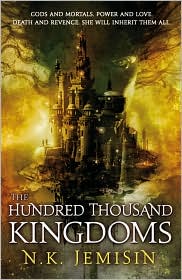
Review: The Hundred Thousand Kingdoms by N.K. Jemisin
The Inheritance Trilogy, Book 1
Tags: fantasy, political conspiracy, gods, POC
Summary
19-year-old Yeine Darr is content being the leader of her father’s people in the High North country. But her Amn mother’s assassination draws Yeine into the politics of the Arameri people. At the palace of Sky, Yeine is, shockingly, named an heir to the Arameri throne, a decision that makes her enemies and will most invariably cut her life short. As she navigates palace life, she also forms a tentative alliance with the Enefadeh, former gods enslaved to the Arameri as the result of losing an ancient battle between the gods eons ago. Her Amn family, the Enefadeh…everyone seems to want something from Yeine, and all of them could cost her her life.
Review
THE HUNDRED THOUSAND KINGDOMS, first in a new trilogy, is first-class fantasy world-building. It’s luscious, dangerous, and impressive as hell, if occasionally dragging in pacing. Still, it is a must-read for high fantasy fans.
My favorite aspect of this book was by far the world-building. N.K. Jemisin succeeds in creating a thoroughly three-dimensional fantasy world, from its religion to its poisonous political factions. And all of this is nestled in the delectably increasingly claustrophobic setting of Sky, the castle-city in which all the shenanigans go down.
I struggled a bit with some characterization and the writing style at some points. I think Yeine is supposed to channel the strength and likability of memorable fantasy heroines, but for the most part she simply doesn’t do much to inspire such regard. She is a political pawn, lacking in agency, so I understand that she is limited in opportunities in which to impress, but I still wish there had been more in-the-moment action and a little less reflection on Yeine’s part. My favorite characters were Nahadoth and Sieh, both gods and both stronger personalities than Yeine, and thus interesting to read about whenever they were granted story space.
Additionally, Yeine’s internal speech felt frustrating to me at times. I also understand that this was what had to happen (but I can’t tell you why, since that would be a spoiler), but the more experimental narrative parts are rather jarring if one expects the traditional chronological narration that most high fantasies employ. Likewise, I’m not sure if the experimental narration completely succeeded with me.
Overall, however, I was super impressed by THE HUNDRED THOUSAND KINGDOMS, and will not hesitate to read Jemisin’s future books even despite the elements of this book that didn’t entirely work for me (because I know that that is very subjective nitpicking). Definitely a great book if you’re a fan of high fantasy!
Cover discussion: This cover kicks BUTT. The furiously golden tone, the translucent face, the creepy power of Sky... luuuuurve.
Orbit Books / Feb. 25, 2010 / Paperback / 427pp. / $13.99
Personal copy.
Tags: fantasy, political conspiracy, gods, POC
Summary
19-year-old Yeine Darr is content being the leader of her father’s people in the High North country. But her Amn mother’s assassination draws Yeine into the politics of the Arameri people. At the palace of Sky, Yeine is, shockingly, named an heir to the Arameri throne, a decision that makes her enemies and will most invariably cut her life short. As she navigates palace life, she also forms a tentative alliance with the Enefadeh, former gods enslaved to the Arameri as the result of losing an ancient battle between the gods eons ago. Her Amn family, the Enefadeh…everyone seems to want something from Yeine, and all of them could cost her her life.
Review
THE HUNDRED THOUSAND KINGDOMS, first in a new trilogy, is first-class fantasy world-building. It’s luscious, dangerous, and impressive as hell, if occasionally dragging in pacing. Still, it is a must-read for high fantasy fans.
My favorite aspect of this book was by far the world-building. N.K. Jemisin succeeds in creating a thoroughly three-dimensional fantasy world, from its religion to its poisonous political factions. And all of this is nestled in the delectably increasingly claustrophobic setting of Sky, the castle-city in which all the shenanigans go down.
I struggled a bit with some characterization and the writing style at some points. I think Yeine is supposed to channel the strength and likability of memorable fantasy heroines, but for the most part she simply doesn’t do much to inspire such regard. She is a political pawn, lacking in agency, so I understand that she is limited in opportunities in which to impress, but I still wish there had been more in-the-moment action and a little less reflection on Yeine’s part. My favorite characters were Nahadoth and Sieh, both gods and both stronger personalities than Yeine, and thus interesting to read about whenever they were granted story space.
Additionally, Yeine’s internal speech felt frustrating to me at times. I also understand that this was what had to happen (but I can’t tell you why, since that would be a spoiler), but the more experimental narrative parts are rather jarring if one expects the traditional chronological narration that most high fantasies employ. Likewise, I’m not sure if the experimental narration completely succeeded with me.
Overall, however, I was super impressed by THE HUNDRED THOUSAND KINGDOMS, and will not hesitate to read Jemisin’s future books even despite the elements of this book that didn’t entirely work for me (because I know that that is very subjective nitpicking). Definitely a great book if you’re a fan of high fantasy!
Cover discussion: This cover kicks BUTT. The furiously golden tone, the translucent face, the creepy power of Sky... luuuuurve.
Orbit Books / Feb. 25, 2010 / Paperback / 427pp. / $13.99
Personal copy.
Wednesday, March 30, 2011
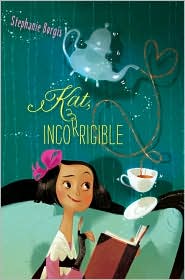
Review: Kat, Incorrigible by Stephanie Burgis
Tags: middle grade, historical fantasy, Regency England, magic
Summary
12-year-old Kat Stephenson wishes she could do something to help out her family. Her brother is in debt, her father is weak, her stepmother is borderline evil, her sister Angeline has been casting love spells that go awry, and her oldest sister Elissa might have to marry the sinister Sir Neville to save their family from ruin.
It’s a good thing, then, that Kat has inherited her mother’s magic skills. However, it’s hard to know who to trust, especially when it appears that there are people who might be interested in her family just for their magic…
Review
If KAT, INCORRIGIBLE had been around when I was in middle school, it would’ve been my favorite book of ALL TIME. It has an amazing narrator and charm to the likes of which I haven’t seen since I read Gail Carson Levine’s Ella Enchanted for the first time in fifth grade (and which still remains one of my favorite books to this day).
Kat is undeniably the best part about this book. Unlike other historical fiction heroines I’ve encountered in the past, Kat’s modern-day stubbornness and rebelliousness feels perfectly natural. She is at that wonderful age when she can resist societal conventions without appearing petulant or immature, and she defies all our expectations, much to our endless delight. She has moments, for example, when she consciously refuses to act like the silly, spineless heroines in her sister’s favorite gothic novels, the similarity to some 21st-century YA lit too good to go ignored. It takes great skill to write a historical character with modern appeal, but Stephanie Burgis does it like she was born to write this.
The villains in this book may be rather straightforwardly sinister, but it works for its middle-grade audience, and besides, it’s the “gray” characters—the complex supporting ones—that showcase Burgis’ extraordinary talent for creating and developing characters. Kat’s older sisters, Elissa and Angeline, have distinct personalities and are enjoyable in their own way. Throughout KAT, INCORRIGIBLE, Kat struggles to figure out whom she can entrust her secrets to, and we can empathize with her confusion and suspicion as the adults circling her approach with a variety of motives.
KAT, INCORRIGIBLE charmed me into a place of childlike giddiness that I haven’t encountered in too many years. This deceptively easy read is actually rich with character development and possibilities for future books in the series. Without a doubt I would not hesitate to hand this out to every girl I know between the ages of 10 and 14, and I highly recommend you check this delightful book out, and fall under Kat’s benevolent charms. I can’t wait for more of Kat’s adventures!
Similar Authors
Gail Carson Levine (Ella Enchanted)
Writing: 5/5
Characters: 5/5
Plot: 5/5
Overall Rating: 5 out of 5
Cover discussion: It's cute! Although admittedly not what I was expecting as a cover. Still, the more I've looked at it, the more I like it.
Atheneum / April 5, 2011 / Hardcover / 304pp. / $16.99
Received for review from Simon & Schuster. Thank you!
Summary
12-year-old Kat Stephenson wishes she could do something to help out her family. Her brother is in debt, her father is weak, her stepmother is borderline evil, her sister Angeline has been casting love spells that go awry, and her oldest sister Elissa might have to marry the sinister Sir Neville to save their family from ruin.
It’s a good thing, then, that Kat has inherited her mother’s magic skills. However, it’s hard to know who to trust, especially when it appears that there are people who might be interested in her family just for their magic…
Review
If KAT, INCORRIGIBLE had been around when I was in middle school, it would’ve been my favorite book of ALL TIME. It has an amazing narrator and charm to the likes of which I haven’t seen since I read Gail Carson Levine’s Ella Enchanted for the first time in fifth grade (and which still remains one of my favorite books to this day).
Kat is undeniably the best part about this book. Unlike other historical fiction heroines I’ve encountered in the past, Kat’s modern-day stubbornness and rebelliousness feels perfectly natural. She is at that wonderful age when she can resist societal conventions without appearing petulant or immature, and she defies all our expectations, much to our endless delight. She has moments, for example, when she consciously refuses to act like the silly, spineless heroines in her sister’s favorite gothic novels, the similarity to some 21st-century YA lit too good to go ignored. It takes great skill to write a historical character with modern appeal, but Stephanie Burgis does it like she was born to write this.
The villains in this book may be rather straightforwardly sinister, but it works for its middle-grade audience, and besides, it’s the “gray” characters—the complex supporting ones—that showcase Burgis’ extraordinary talent for creating and developing characters. Kat’s older sisters, Elissa and Angeline, have distinct personalities and are enjoyable in their own way. Throughout KAT, INCORRIGIBLE, Kat struggles to figure out whom she can entrust her secrets to, and we can empathize with her confusion and suspicion as the adults circling her approach with a variety of motives.
KAT, INCORRIGIBLE charmed me into a place of childlike giddiness that I haven’t encountered in too many years. This deceptively easy read is actually rich with character development and possibilities for future books in the series. Without a doubt I would not hesitate to hand this out to every girl I know between the ages of 10 and 14, and I highly recommend you check this delightful book out, and fall under Kat’s benevolent charms. I can’t wait for more of Kat’s adventures!
Similar Authors
Gail Carson Levine (Ella Enchanted)
Writing: 5/5
Characters: 5/5
Plot: 5/5
Overall Rating: 5 out of 5
Cover discussion: It's cute! Although admittedly not what I was expecting as a cover. Still, the more I've looked at it, the more I like it.
Atheneum / April 5, 2011 / Hardcover / 304pp. / $16.99
Received for review from Simon & Schuster. Thank you!
Tuesday, March 29, 2011
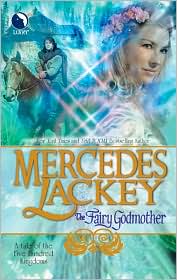
Review: The Fairy Godmother by Mercedes Lackey
Tags: fantasy, fractured fairy tale, magic
Summary
Elena’s miserable life as her stepfamily’s slave should’ve qualified her to have a Cinderella-like happy ending. However, things don’t quite work out that way. Instead, Elena becomes a fairy godmother-in-training. Her primary duty involves working with the Tradition, a powerful magic that tries to force people and situations into recognizable story arcs.
Being Fairy Godmother, however, is a lonely life, and Elena is not sure if her desire to love and be loved can handle such loneliness. Can she find a way to make everyone happy and get her own happy ending?
Review
I have heard of Mercedes Lackey, of course—what fantasy reader hasn’t?—but, until this book, had not read anything by her. I picked up THE FAIRY GODMOTHER on a whim in the bookstore, when I was still on a post-Crown Duel high and desiring a similarly pleasurable fantasy read. THE FAIRY GODMOTHER definitely fulfilled that desire of mine. It’s a wonderfully unique concept, crafted by the hands of a master.
The most amazing part about this book is the thoroughness with which Mercedes Lackey explores an original fantasy concept. There are some pretty standard tropes in fairy tales: long-suffering good girl gets the prince, magic helps the overlooked but goodhearted and deserving third son, and so on. Lackey takes those common expectations and transforms it into the Tradition, a powerful and often dangerously insistent magical force that tries to carry out its tropes without any regard to people’s different wishes, and that must be appeased through subtle manipulations. It’s enchantingly clever, a new take on the fractured fairy tale, and would give someone like me oodles of delight as we consider how Lackey lays out the plot and rules in this world.
The characters, in contrast, do not shine as strongly. Elena is a fine, strong female protagonist, but she doesn’t particularly stand out beyond being a typical fine, strong female protagonist. The main plot here is the magical one, and so the romantic subplot is exactly that—a subplot, feeling a little forced and out of place at times.
Overall, though, I thoroughly enjoyed THE FAIRY GODMOTHER on account of its wonderfully executed original concept. Upon finishing this book, I eagerly went out and found the other books in this series, and will look forward to delving into them when I get the chance!
Writing: 4/5
Characters: 4/5
Plot: 4/5
Overall Rating: 4 out of 5
Cover discussion: I was totally drawn by its fantastical-ness. The whimsical, feminine colors, the font... okay, and I didn't look too hard at the models, especially that man in the background.
Luna / May 1, 2010 / Mass Market Paperback (reprint) / 487pp. / $7.99
Personal copy.
Summary
Elena’s miserable life as her stepfamily’s slave should’ve qualified her to have a Cinderella-like happy ending. However, things don’t quite work out that way. Instead, Elena becomes a fairy godmother-in-training. Her primary duty involves working with the Tradition, a powerful magic that tries to force people and situations into recognizable story arcs.
Being Fairy Godmother, however, is a lonely life, and Elena is not sure if her desire to love and be loved can handle such loneliness. Can she find a way to make everyone happy and get her own happy ending?
Review
I have heard of Mercedes Lackey, of course—what fantasy reader hasn’t?—but, until this book, had not read anything by her. I picked up THE FAIRY GODMOTHER on a whim in the bookstore, when I was still on a post-Crown Duel high and desiring a similarly pleasurable fantasy read. THE FAIRY GODMOTHER definitely fulfilled that desire of mine. It’s a wonderfully unique concept, crafted by the hands of a master.
The most amazing part about this book is the thoroughness with which Mercedes Lackey explores an original fantasy concept. There are some pretty standard tropes in fairy tales: long-suffering good girl gets the prince, magic helps the overlooked but goodhearted and deserving third son, and so on. Lackey takes those common expectations and transforms it into the Tradition, a powerful and often dangerously insistent magical force that tries to carry out its tropes without any regard to people’s different wishes, and that must be appeased through subtle manipulations. It’s enchantingly clever, a new take on the fractured fairy tale, and would give someone like me oodles of delight as we consider how Lackey lays out the plot and rules in this world.
The characters, in contrast, do not shine as strongly. Elena is a fine, strong female protagonist, but she doesn’t particularly stand out beyond being a typical fine, strong female protagonist. The main plot here is the magical one, and so the romantic subplot is exactly that—a subplot, feeling a little forced and out of place at times.
Overall, though, I thoroughly enjoyed THE FAIRY GODMOTHER on account of its wonderfully executed original concept. Upon finishing this book, I eagerly went out and found the other books in this series, and will look forward to delving into them when I get the chance!
Writing: 4/5
Characters: 4/5
Plot: 4/5
Overall Rating: 4 out of 5
Cover discussion: I was totally drawn by its fantastical-ness. The whimsical, feminine colors, the font... okay, and I didn't look too hard at the models, especially that man in the background.
Luna / May 1, 2010 / Mass Market Paperback (reprint) / 487pp. / $7.99
Personal copy.
Saturday, March 26, 2011
Review: The Wager by Donna Jo Napoli
Tags: YA, fantasy, retelling
Summary
Don Giovanni, a filthy rich orphan living in 12th-century Italy, has his life turned upside down when a giant wave destroys everything he owns. Friendless and penniless, Don Giovanni wonders the countryside until he meets with the Devil, who offers him a wager he just can’t pass up: the Devil will provide Don Giovanni with a purse that magically produces any amount of money he desires, and in return, Don Giovanni must not clean himself for three years, three months, and three days, otherwise his soul is forfeited.
Review
Fantasy master Donna Jo Napoli has written another awe-inspiring tale that will appeal to appreciators of the beautiful, unusual, and hopeful.
THE WAGER gets off to a rather slow start, but it rewards the patient. It has the feel of a classic fairy tale, which means that characterization is sometimes lacking, favoring instead lush descriptive passages and a sprawling feel to the story. Once Don Giovanni accepts the Devil’s wager, however, the book becomes very hard to put down, as you can’t help wondering just how bad things can get for him.
Don Giovanni starts off as an extremely unlikable fellow. He is self-centered and believes that money can solve anything. So the extent of his character development, and how much we end up liking him, feels like magic in itself. He ends up enduring his trials with as much dignity as a person with open sores and bugs living on his dirty skin can, and I liked him all the more for it.
In the midst of all the fast-paced, nonstop-action speculative YA fiction out there, THE WAGER unassumingly takes its place as a solid work of retold fantasy. Check this out if you’re craving an old-fashioned, trial-of-endurance fairy tale retelling.
Similar Authors
Erin Bow (Plain Kate)
Writing: 4/5
Characters: 3/5
Plot: 3/5
Overall Rating: 3.5 out of 5
Cover discussion: 3.5 out of 5 - It's bold, daring, and challenges you to look at it; I love red and black.
Henry Holt & Co. / April 27, 2010 / Hardcover / 272pp. / $16.99
Personal copy, read for Cybils.
Summary
Don Giovanni, a filthy rich orphan living in 12th-century Italy, has his life turned upside down when a giant wave destroys everything he owns. Friendless and penniless, Don Giovanni wonders the countryside until he meets with the Devil, who offers him a wager he just can’t pass up: the Devil will provide Don Giovanni with a purse that magically produces any amount of money he desires, and in return, Don Giovanni must not clean himself for three years, three months, and three days, otherwise his soul is forfeited.
Review
Fantasy master Donna Jo Napoli has written another awe-inspiring tale that will appeal to appreciators of the beautiful, unusual, and hopeful.
THE WAGER gets off to a rather slow start, but it rewards the patient. It has the feel of a classic fairy tale, which means that characterization is sometimes lacking, favoring instead lush descriptive passages and a sprawling feel to the story. Once Don Giovanni accepts the Devil’s wager, however, the book becomes very hard to put down, as you can’t help wondering just how bad things can get for him.
Don Giovanni starts off as an extremely unlikable fellow. He is self-centered and believes that money can solve anything. So the extent of his character development, and how much we end up liking him, feels like magic in itself. He ends up enduring his trials with as much dignity as a person with open sores and bugs living on his dirty skin can, and I liked him all the more for it.
In the midst of all the fast-paced, nonstop-action speculative YA fiction out there, THE WAGER unassumingly takes its place as a solid work of retold fantasy. Check this out if you’re craving an old-fashioned, trial-of-endurance fairy tale retelling.
Similar Authors
Erin Bow (Plain Kate)
Writing: 4/5
Characters: 3/5
Plot: 3/5
Overall Rating: 3.5 out of 5
Cover discussion: 3.5 out of 5 - It's bold, daring, and challenges you to look at it; I love red and black.
Henry Holt & Co. / April 27, 2010 / Hardcover / 272pp. / $16.99
Personal copy, read for Cybils.
Thursday, March 17, 2011
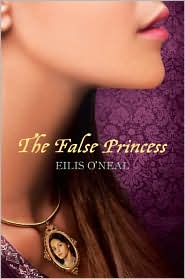
Review: The False Princess by Eilis O'Neal
Tags: middle grade, YA, fantasy, magic, political conspiracy
Summary
Princess Nalia gets the worst sixteenth-birthday surprise ever when it is revealed that she is not the real princess, but a commoner decoy for the real princess, placed in the castle because of a prophecy that foretold of the danger befalling the princess before her sixteenth birthday. Stripped of everything she has ever known, including her name and her best friend Kiernan, the girl now called Sinda tries to adjust to her new commoner life with her aunt, who is not at all happy about her new relative.
When the emergence of a long repressed magic within her forces Sinda to return to the royal city, she stumbles upon a dark conspiracy behind the throne that only she can stop. With Kiernan’s help, Sinda undergoes dangerous journeys and evades the hands of powerful enemies in order to save her country’s future.
Review
Reading the jacket synopsis, I thought this book was going to be yet another “princess finds out she’s not the real princess and attempts to make a new life for herself” tale. Happily, however, THE FALSE PRINCESS is all that, and more. It is an engaging light fantasy that will charm you no matter how well read you think you are in this genre.
Past the first chapter, the plot of THE FALSE PRINCESS moves at an entertainingly brisk pace, as it follows Sinda into the country, back into the city, and in and out of nervewracking situations. The time that Sinda spends with her aunt feels a little forced, her attempt to fit into her new life glossed over, but this makes sense when you consider that the most exciting part of the book occurs when Sinda returns to the city and discovers the conspiracy.
THE FALSE PRINCESS is at its core a fairly standard “quest” tale, but contains so much spunk and personality from its characters that it transcends the trope and makes it appealing to even readers who don’t usually read fantasy, readers who prefer character-driven novels. Sinda changes from a timid royal into an initiative-taking heroine, a brave girl who takes on tasks even knowing that the odds are stacked against her. Kiernan is a wonderful supporting character, utterly dedicated to Sinda, with a playfulness that offsets the darker tones of Sinda’s quest.
THE FALSE PRINCESS is a friendly fantasy read that would be a perfect gift for younger readers who’ve enjoyed the works of Gail Carson Levine, Diana Wynne Jones, and Margaret Peterson Haddix’s fantasy novels. It’s definitely a cut above other light fantasies I’ve read recently, and I would definitely recommend it to a readers looking for exactly that!
Similar Authors
Gail Carson Levine
Margaret Peterson Haddix (Palace of Mirrors)
Mercedes Lackey
Writing: 4/5
Characters: 4/5
Plot: 3/5
Overall Rating: 3.5 out of 5
Cover discussion: 2.5 out of 5 - It totally doesn't capture Sinda's spark of life, but I do like it slightly better than the original image. This cover will possibly appeal more to older teens.
EgmontUSA / Jan. 25, 2011 / Hardcover / 336pp. / $16.99
Sent by publisher after accepting review pitch. Thank you, Jenny and Regina!
Summary
Princess Nalia gets the worst sixteenth-birthday surprise ever when it is revealed that she is not the real princess, but a commoner decoy for the real princess, placed in the castle because of a prophecy that foretold of the danger befalling the princess before her sixteenth birthday. Stripped of everything she has ever known, including her name and her best friend Kiernan, the girl now called Sinda tries to adjust to her new commoner life with her aunt, who is not at all happy about her new relative.
When the emergence of a long repressed magic within her forces Sinda to return to the royal city, she stumbles upon a dark conspiracy behind the throne that only she can stop. With Kiernan’s help, Sinda undergoes dangerous journeys and evades the hands of powerful enemies in order to save her country’s future.
Review
Reading the jacket synopsis, I thought this book was going to be yet another “princess finds out she’s not the real princess and attempts to make a new life for herself” tale. Happily, however, THE FALSE PRINCESS is all that, and more. It is an engaging light fantasy that will charm you no matter how well read you think you are in this genre.
Past the first chapter, the plot of THE FALSE PRINCESS moves at an entertainingly brisk pace, as it follows Sinda into the country, back into the city, and in and out of nervewracking situations. The time that Sinda spends with her aunt feels a little forced, her attempt to fit into her new life glossed over, but this makes sense when you consider that the most exciting part of the book occurs when Sinda returns to the city and discovers the conspiracy.
THE FALSE PRINCESS is at its core a fairly standard “quest” tale, but contains so much spunk and personality from its characters that it transcends the trope and makes it appealing to even readers who don’t usually read fantasy, readers who prefer character-driven novels. Sinda changes from a timid royal into an initiative-taking heroine, a brave girl who takes on tasks even knowing that the odds are stacked against her. Kiernan is a wonderful supporting character, utterly dedicated to Sinda, with a playfulness that offsets the darker tones of Sinda’s quest.
THE FALSE PRINCESS is a friendly fantasy read that would be a perfect gift for younger readers who’ve enjoyed the works of Gail Carson Levine, Diana Wynne Jones, and Margaret Peterson Haddix’s fantasy novels. It’s definitely a cut above other light fantasies I’ve read recently, and I would definitely recommend it to a readers looking for exactly that!
Similar Authors
Gail Carson Levine
Margaret Peterson Haddix (Palace of Mirrors)
Mercedes Lackey
Writing: 4/5
Characters: 4/5
Plot: 3/5
Overall Rating: 3.5 out of 5
Cover discussion: 2.5 out of 5 - It totally doesn't capture Sinda's spark of life, but I do like it slightly better than the original image. This cover will possibly appeal more to older teens.
EgmontUSA / Jan. 25, 2011 / Hardcover / 336pp. / $16.99
Sent by publisher after accepting review pitch. Thank you, Jenny and Regina!
Labels:
3.5,
eilis o'neal,
fantasy,
middle grade,
review,
YA
Thursday, February 17, 2011
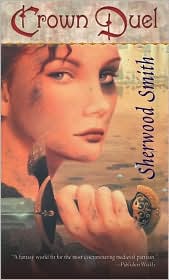
Review: Crown Duel by Sherwood Smith
Tags: middle grade, YA, fantasy, war, politics, romance
Summary
Meliara and her brother Branaric’s lives change forever the day they promise their count father on his deathbed to overthrow the king’s corrupt regime. Mel and Bran lead a ragtag bunch of loyal servants and friends against the king’s army, which throws Mel again and again across the path of the Marquis of Shevraeth, a stoic man hiding quite a few number of his secrets. When, however, the dust of war has settled, Mel discovers that she just might prefer running and hiding across the countryside to save her life better than putting on the façade of gracious noblewoman in the new king-to-be’s court.
Review
Oh how I adore feisty heroines embroiled in duplicitous, action-packed fantasy political intrigues and romance! I wish I had known about this book earlier, for I have a feeling it will be one that I return to again and again for that magical dose of adventure, feminism, and romance.
Mel is my favorite kind of fantasy heroine: tough, resourceful, opinionated, and scared of being seen as vulnerable despite her deeply warm heart. I don’t even care that this type of female protagonist is a fantasy trope, because I just love ‘em. I loved reading about Mel’s struggles to avoid capture at the hands of Shevraeth and the king’s other men. And then I loved reading about Mel’s struggles to make herself a gentlewoman, worthy of the respect of the court. Mel is a protagonist worthy of Tamora Pierce’s creations.
I love that this book’s pacing never drags, which is great because I just get so darn bored of the MC’s moody contemplations of anything and everything that has or hasn’t happened to her. I admit wholeheartedly that I adored the book’s romantic subplot and, yes, will probably reread this book many times for mostly that element. It reminds me of a sort of Elizabeth Bennet-Mr. Darcy relationship arc, and I will leave it at that appetite-whetting point.
CROWN DUEL is a must-read if you love your Tamora Pierce and Gail Carson Levine. Maybe it doesn’t break new ground in lighthearted fantasy literature, but it fuels the fire that keeps my heart warm, fuzzy, and swooningly romantic. Sighhh. Now, back to rereading favorite bits…
Similar Authors
Tamora Pierce
Gail Carson Levine
Megan Whalen Turner
Writing: 4/5
Characters: 5/5
Plot: 5/5
Overall Rating: 4.5 out of 5
Cover discussion: 2 out of 5 - Ack. Someone might've taken creative license a bit too far... That's definitely not how I pictured Meliara at all, and is just overall very awkward, though it definitely shouts "young fantasy!" to me.
Penguin Firebird Fantasy / June 2002 (reprint) / Paperback / 480pp. / $8.99
Personal copy. Yay!
Summary
Meliara and her brother Branaric’s lives change forever the day they promise their count father on his deathbed to overthrow the king’s corrupt regime. Mel and Bran lead a ragtag bunch of loyal servants and friends against the king’s army, which throws Mel again and again across the path of the Marquis of Shevraeth, a stoic man hiding quite a few number of his secrets. When, however, the dust of war has settled, Mel discovers that she just might prefer running and hiding across the countryside to save her life better than putting on the façade of gracious noblewoman in the new king-to-be’s court.
Review
Oh how I adore feisty heroines embroiled in duplicitous, action-packed fantasy political intrigues and romance! I wish I had known about this book earlier, for I have a feeling it will be one that I return to again and again for that magical dose of adventure, feminism, and romance.
Mel is my favorite kind of fantasy heroine: tough, resourceful, opinionated, and scared of being seen as vulnerable despite her deeply warm heart. I don’t even care that this type of female protagonist is a fantasy trope, because I just love ‘em. I loved reading about Mel’s struggles to avoid capture at the hands of Shevraeth and the king’s other men. And then I loved reading about Mel’s struggles to make herself a gentlewoman, worthy of the respect of the court. Mel is a protagonist worthy of Tamora Pierce’s creations.
I love that this book’s pacing never drags, which is great because I just get so darn bored of the MC’s moody contemplations of anything and everything that has or hasn’t happened to her. I admit wholeheartedly that I adored the book’s romantic subplot and, yes, will probably reread this book many times for mostly that element. It reminds me of a sort of Elizabeth Bennet-Mr. Darcy relationship arc, and I will leave it at that appetite-whetting point.
CROWN DUEL is a must-read if you love your Tamora Pierce and Gail Carson Levine. Maybe it doesn’t break new ground in lighthearted fantasy literature, but it fuels the fire that keeps my heart warm, fuzzy, and swooningly romantic. Sighhh. Now, back to rereading favorite bits…
Similar Authors
Tamora Pierce
Gail Carson Levine
Megan Whalen Turner
Writing: 4/5
Characters: 5/5
Plot: 5/5
Overall Rating: 4.5 out of 5
Cover discussion: 2 out of 5 - Ack. Someone might've taken creative license a bit too far... That's definitely not how I pictured Meliara at all, and is just overall very awkward, though it definitely shouts "young fantasy!" to me.
Penguin Firebird Fantasy / June 2002 (reprint) / Paperback / 480pp. / $8.99
Personal copy. Yay!
Labels:
4.5,
fantasy,
middle grade,
review,
sherwood smith,
YA
Thursday, February 3, 2011
Review: Sapphique by Catherine Fisher
Incarceron, Book 2 (Incarceron review)
Tags: YA, fantasy, dystopian(ish)
Summary
Aside from the legendary Sapphique, Finn is the only prisoner ever to escape from the living prison Incarceron. He returns in the middle of court uproar: his friend Claudia, the daughter of the former Warden of Incarceron, is convinced that Finn is the lost prince, heir to the throne. Finn’s own doubts about his history aside, their lives become even more at stake when another young man shows up, claiming to be the lost prince.
Back in Incarceron, Finn’s friends Keiro and Attia search for Sapphique’s glove, which may be the only remaining way out of Incarceron. Trouble is, they’re not the only ones who seek the glove: the prison itself wants it, and doesn’t seem to care how many lives get destroyed in the process.
Review
If Incarceron was a great book that “shakes the foundations of your literary beliefs” (quoting from my review of Incarceron), then SAPPHIQUE is a fantasy achievement of canonical proportions. It takes everything we appreciated and were in awe of in the first book and takes it to the next level, making sure that this is a two-book series we will remember for decades to come.
Whereas Incarceron took me a couple of chapters to get into, SAPPHIQUE captured my attention immediately, opening with one of Attia’s attempts to get the Glove. We are already fairly well aware of how Incarceron as well as the Protocol-mandated “real world” operates, and thus the stakes can be all the higher in this sequel. Catherine Fisher loves to write chapters with nail-biting endings that just force you to keep on reading. It’s fast-paced and utterly brilliant.
Incarceron and SAPPHIQUE are part of that rare type of novel where the fast-paced expansiveness of the story excuses weaknesses in characterization. Some readers will still not like Finn, Claudia, Keiro, or Attia in this second book—but they are not really meant to be liked. They are people stuck in life-or-death situations, and they can’t afford to be nice, for to be nice is to lose.
So SAPPHIQUE’s appeal lies not in its characters, but rather in the way Catherine Fisher can tell a story that keeps you glued to the pages. The ending may frustrate some readers, but personally I thought it was the perfect ending to the story, and something that had been building up for a while. SAPPHIQUE is a must-read if you were a fan of Incarceron, and I can only hope that Catherine Fisher will write more extraordinary books in the very near future!
Similar Authors
Shannon Hale
Writing: 5/5
Characters: 4/5
Plot: 5/5
Overall Rating: 4.5 out of 5
Cover discussion: 4 out of 5 - A perfect complement to Incarceron's cover.
Penguin Books / Dec. 28, 2010 / Hardcover / 462pp. / $17.99
ARC picked up at BEA 2010.
Tags: YA, fantasy, dystopian(ish)
Summary
Aside from the legendary Sapphique, Finn is the only prisoner ever to escape from the living prison Incarceron. He returns in the middle of court uproar: his friend Claudia, the daughter of the former Warden of Incarceron, is convinced that Finn is the lost prince, heir to the throne. Finn’s own doubts about his history aside, their lives become even more at stake when another young man shows up, claiming to be the lost prince.
Back in Incarceron, Finn’s friends Keiro and Attia search for Sapphique’s glove, which may be the only remaining way out of Incarceron. Trouble is, they’re not the only ones who seek the glove: the prison itself wants it, and doesn’t seem to care how many lives get destroyed in the process.
Review
If Incarceron was a great book that “shakes the foundations of your literary beliefs” (quoting from my review of Incarceron), then SAPPHIQUE is a fantasy achievement of canonical proportions. It takes everything we appreciated and were in awe of in the first book and takes it to the next level, making sure that this is a two-book series we will remember for decades to come.
Whereas Incarceron took me a couple of chapters to get into, SAPPHIQUE captured my attention immediately, opening with one of Attia’s attempts to get the Glove. We are already fairly well aware of how Incarceron as well as the Protocol-mandated “real world” operates, and thus the stakes can be all the higher in this sequel. Catherine Fisher loves to write chapters with nail-biting endings that just force you to keep on reading. It’s fast-paced and utterly brilliant.
Incarceron and SAPPHIQUE are part of that rare type of novel where the fast-paced expansiveness of the story excuses weaknesses in characterization. Some readers will still not like Finn, Claudia, Keiro, or Attia in this second book—but they are not really meant to be liked. They are people stuck in life-or-death situations, and they can’t afford to be nice, for to be nice is to lose.
So SAPPHIQUE’s appeal lies not in its characters, but rather in the way Catherine Fisher can tell a story that keeps you glued to the pages. The ending may frustrate some readers, but personally I thought it was the perfect ending to the story, and something that had been building up for a while. SAPPHIQUE is a must-read if you were a fan of Incarceron, and I can only hope that Catherine Fisher will write more extraordinary books in the very near future!
Similar Authors
Shannon Hale
Writing: 5/5
Characters: 4/5
Plot: 5/5
Overall Rating: 4.5 out of 5
Cover discussion: 4 out of 5 - A perfect complement to Incarceron's cover.
Penguin Books / Dec. 28, 2010 / Hardcover / 462pp. / $17.99
ARC picked up at BEA 2010.
Monday, January 31, 2011
Review: The Iron Daughter by Julie Kagawa
The Iron Fey, Book 2 (The Iron King review)
Tags: YA, fantasy, faeries, war, love triangle
Summary
Half-faery, half-human Meghan Chase made a bargain with the Unseelie prince, Ash: he helps her rescue her brother from the clutches of the evil Iron Fey, and she would go willingly to the Unseelie court. Now, Meghan is trapped in a world of ice and cold; she cannot access her magic powers; Ash has seemingly deserted her; and no one believes her about the Iron Fey.
A fatal attack in the Winter Court has Meghan and Ash running, and Summer and Winter Courts preparing for war. Meghan thought that they had defeated the Iron King—but a new threat arises that may prove to be even more dangerous than she had ever thought.
Review
Personally, THE IRON DAUGHTER didn’t capture my heart the way the first book, The Iron King, did. However, I am fairly certain that those who loved the first book will find just as much magic, romance, and adventure in this second installment of this faerie series that deserves all its good hype.
Romance fans rejoice, as THE IRON DAUGHTER revolves much around Meghan’s romantic troubles. One minute, Ash is acting as cold as his courtly title; the next, he is doing something that makes Meghan—and us—swoon. In fact, romance takes center court in this sequel, so much so that it definitely had me rolling my eyes and smacking my palm against my forehead a few times. Meghan’s narration definitely takes a turn towards the “Bella Swan melodramatic” in this book—not a big deal if you’re caught up in Ash and the story as Meghan is, but definitely a bit irritating if you notice the Bella syndromes.
What makes this book worth reading despite any of your qualms about romantic melodrama, however, is the excellent writing and worldbuilding. Julie Kagawa writes with the heart of a cinematographer: sweeping faerie scenes are described down to the icicles sparkling at the ends of tree branches, so that you feel like you’re in Meghan’s faery world with all of your senses. Reading Julie’s books is an incredible sensory experience that adds an extra level to the popular appeal of the love triangle, faery setting, and rollicking adventure pacing.
THE IRON DAUGHTER will leave fans of the series happy, and even if I wasn’t completely enamored with the book, I am still looking forward to what adventures these beloved characters will have to face in the showdown that is to come in the next Iron Fey book.
Writing: 4/5
Characters: 3/5
Plot: 3/5
Overall Rating: 3.5 out of 5
Cover discussion: 3.5 out of 5 - I know there's little movement and it's all so very posed and heavily edited... but it's just so pretty... I can't stop staring at it... and petting it...
Harlequin TEEN / Aug. 1, 2010 / Paperback / 304pp. / $9.99
Copy... bought? Sent by a publicist? I forget. Gah. Sorry. Silly brain.
Tags: YA, fantasy, faeries, war, love triangle
Summary
Half-faery, half-human Meghan Chase made a bargain with the Unseelie prince, Ash: he helps her rescue her brother from the clutches of the evil Iron Fey, and she would go willingly to the Unseelie court. Now, Meghan is trapped in a world of ice and cold; she cannot access her magic powers; Ash has seemingly deserted her; and no one believes her about the Iron Fey.
A fatal attack in the Winter Court has Meghan and Ash running, and Summer and Winter Courts preparing for war. Meghan thought that they had defeated the Iron King—but a new threat arises that may prove to be even more dangerous than she had ever thought.
Review
Personally, THE IRON DAUGHTER didn’t capture my heart the way the first book, The Iron King, did. However, I am fairly certain that those who loved the first book will find just as much magic, romance, and adventure in this second installment of this faerie series that deserves all its good hype.
Romance fans rejoice, as THE IRON DAUGHTER revolves much around Meghan’s romantic troubles. One minute, Ash is acting as cold as his courtly title; the next, he is doing something that makes Meghan—and us—swoon. In fact, romance takes center court in this sequel, so much so that it definitely had me rolling my eyes and smacking my palm against my forehead a few times. Meghan’s narration definitely takes a turn towards the “Bella Swan melodramatic” in this book—not a big deal if you’re caught up in Ash and the story as Meghan is, but definitely a bit irritating if you notice the Bella syndromes.
What makes this book worth reading despite any of your qualms about romantic melodrama, however, is the excellent writing and worldbuilding. Julie Kagawa writes with the heart of a cinematographer: sweeping faerie scenes are described down to the icicles sparkling at the ends of tree branches, so that you feel like you’re in Meghan’s faery world with all of your senses. Reading Julie’s books is an incredible sensory experience that adds an extra level to the popular appeal of the love triangle, faery setting, and rollicking adventure pacing.
THE IRON DAUGHTER will leave fans of the series happy, and even if I wasn’t completely enamored with the book, I am still looking forward to what adventures these beloved characters will have to face in the showdown that is to come in the next Iron Fey book.
Writing: 4/5
Characters: 3/5
Plot: 3/5
Overall Rating: 3.5 out of 5
Cover discussion: 3.5 out of 5 - I know there's little movement and it's all so very posed and heavily edited... but it's just so pretty... I can't stop staring at it... and petting it...
Harlequin TEEN / Aug. 1, 2010 / Paperback / 304pp. / $9.99
Copy... bought? Sent by a publicist? I forget. Gah. Sorry. Silly brain.
Saturday, January 8, 2011
Review: Enchanted Ivy by Sarah Beth Durst
Tags: YA, magical realism, college
Summary
Lily Carter, Princeton legacy, visits the campus with her grandfather and sick mother and falls in love with it. A secret society that her grandfather belongs to offers her guaranteed acceptance—but only if she passes the test and finds the Key. What’s the Key? Accompanied by a cute guy named Tye, who may know more than he’s letting on to, Lily traverses the campus on her quest…and makes some shocking revelations about Princeton as well as her heritage.
For there are actually two Princetons, and the university’s famous main gate is the doorway between the Princeton we all know and the other, magical Princeton. And Lily’s family is somehow involved in the heart of a conflict between the inhabitants of the two worlds, and they might stop at nothing to possess her.
Review
What an amazing idea for a story! Who doesn’t love tales about alternate worlds? I know I do. However, ENCHANTED IVY cut some storytelling corners that unfortunately made it hard for me to invest in the story as fully as I wanted to.
As far as the premise goes, it’s extensive, but Sarah Beth Durst does an admirable job of condensing it to a magnitude appropriate for a YA novel. She creatively reimagines Princeton’s campus as one containing magical secrets in the most obvious of places. For anyone who’s acquainted with the university’s campus, as I am, or anyone who has felt the awe-inspiring austerity of an old and regal college campus, it’s not much of a stretch to imagine the gargoyles as “hibernating” magical professors and gateways existing everywhere.
Oh, how I wish this book had gone on for another 200 or so pages! And not exactly because I didn’t want it to end, but because I think that had the book been longer, elements of the story could have been explored more thoroughly, and the book wouldn’t have given me a harried, rushed feeling as I read it. There is just so much packed into 320 pages that I don’t think many elements were allowed breathing room to grow into fully realized beings. Many of the characters seemed like flat projections of people, from the villain of the story to the boys who help Lily on her quest. In particular, when Tye proclaims to Lily within hours of them meeting each other that, due to their similarities, which I won’t divulge here because of spoilers, they are obviously soulmates, I wanted to howl, “Noooooo! How could you resort to such a paranormal romance cliché?!?!” At that point, I still felt so lost with the story that I couldn’t fully invest in Tye as a love interest yet. Likewise with the “purposes” of many other characters.
That was the danger of having the pacing of this book be all snap-snap-snap, one dramatic event/revelation after the other after the other. No sooner was one crucial key to the plot revealed, and I was still digesting it, when another piled on top, and so on. The rushed pacing unfortunately made this book read almost like a parody of its intent: I knew this book could’ve been extremely awe-inducing and breath-stealing in the best way, but I couldn’t help but feel like it attempted to do too much in too little space—oh, here’s a big bad villain! Here’s a love triangle! Here’s a heretofore unknown magical heritage! And then here’s the big bad villain’s deserved horrible ending!—that little was allowed to reach its potential.
Still, ENCHANTED IVY had the power to surprise and delight me with its twists, turns, and revelations. I particularly loved Lily’s bittersweet relationship with her fragile mother, a woman whose sanity is questionable but all the more endearing as a result of her tremulous hold on reality. If you’re the kind of reader who is often ensnared by an incredible premise, action, and a magical gothic-like setting, do give this book a try.
Writing: 3/5
Characters: 3/5
Plot: 3/5
Overall Rating: 3 out of 5
Cover discussion: 3.5 out of 5 - Whoa! I find it wonderfully unique and alluring. The model's pose is a little awkward, but I do love the stone gargoyle she's posing with.
Margaret K. McElderry / Oct. 12, 2010 / Hardcover / 310pp. / $16.99
Accepted review pitch from author, review copy sent by publisher.
Summary
Lily Carter, Princeton legacy, visits the campus with her grandfather and sick mother and falls in love with it. A secret society that her grandfather belongs to offers her guaranteed acceptance—but only if she passes the test and finds the Key. What’s the Key? Accompanied by a cute guy named Tye, who may know more than he’s letting on to, Lily traverses the campus on her quest…and makes some shocking revelations about Princeton as well as her heritage.
For there are actually two Princetons, and the university’s famous main gate is the doorway between the Princeton we all know and the other, magical Princeton. And Lily’s family is somehow involved in the heart of a conflict between the inhabitants of the two worlds, and they might stop at nothing to possess her.
Review
What an amazing idea for a story! Who doesn’t love tales about alternate worlds? I know I do. However, ENCHANTED IVY cut some storytelling corners that unfortunately made it hard for me to invest in the story as fully as I wanted to.
As far as the premise goes, it’s extensive, but Sarah Beth Durst does an admirable job of condensing it to a magnitude appropriate for a YA novel. She creatively reimagines Princeton’s campus as one containing magical secrets in the most obvious of places. For anyone who’s acquainted with the university’s campus, as I am, or anyone who has felt the awe-inspiring austerity of an old and regal college campus, it’s not much of a stretch to imagine the gargoyles as “hibernating” magical professors and gateways existing everywhere.
Oh, how I wish this book had gone on for another 200 or so pages! And not exactly because I didn’t want it to end, but because I think that had the book been longer, elements of the story could have been explored more thoroughly, and the book wouldn’t have given me a harried, rushed feeling as I read it. There is just so much packed into 320 pages that I don’t think many elements were allowed breathing room to grow into fully realized beings. Many of the characters seemed like flat projections of people, from the villain of the story to the boys who help Lily on her quest. In particular, when Tye proclaims to Lily within hours of them meeting each other that, due to their similarities, which I won’t divulge here because of spoilers, they are obviously soulmates, I wanted to howl, “Noooooo! How could you resort to such a paranormal romance cliché?!?!” At that point, I still felt so lost with the story that I couldn’t fully invest in Tye as a love interest yet. Likewise with the “purposes” of many other characters.
That was the danger of having the pacing of this book be all snap-snap-snap, one dramatic event/revelation after the other after the other. No sooner was one crucial key to the plot revealed, and I was still digesting it, when another piled on top, and so on. The rushed pacing unfortunately made this book read almost like a parody of its intent: I knew this book could’ve been extremely awe-inducing and breath-stealing in the best way, but I couldn’t help but feel like it attempted to do too much in too little space—oh, here’s a big bad villain! Here’s a love triangle! Here’s a heretofore unknown magical heritage! And then here’s the big bad villain’s deserved horrible ending!—that little was allowed to reach its potential.
Still, ENCHANTED IVY had the power to surprise and delight me with its twists, turns, and revelations. I particularly loved Lily’s bittersweet relationship with her fragile mother, a woman whose sanity is questionable but all the more endearing as a result of her tremulous hold on reality. If you’re the kind of reader who is often ensnared by an incredible premise, action, and a magical gothic-like setting, do give this book a try.
Writing: 3/5
Characters: 3/5
Plot: 3/5
Overall Rating: 3 out of 5
Cover discussion: 3.5 out of 5 - Whoa! I find it wonderfully unique and alluring. The model's pose is a little awkward, but I do love the stone gargoyle she's posing with.
Margaret K. McElderry / Oct. 12, 2010 / Hardcover / 310pp. / $16.99
Accepted review pitch from author, review copy sent by publisher.
Monday, December 13, 2010
Review: Discord's Apple by Carrie Vaughn
Tags: fantasy, dystopian, magic, evil
Summary
When Evie Walker returns to her small-town hometown to take care of her sick father, she doesn’t realize what she’s in for, and what secrets about her family her father has been keeping from her. For underneath their house is a magic storeroom, one that many infamous characters—including one ambitious goddess—want access to. Aided by the help of an enigmatic man named Alex, Evie comes into her familial destiny and fights to prevent the total destruction of the world as she knows it.
Review
DISCORD’S APPLE is an epic endeavor that successfully covers a wide range of story topics, from dystopian politics to Greek mythology to fairy tales.
If there’s one thing Carrie Vaughn knows how to do, it’s world-building. All of her worlds in all of her books are effortlessly written; their peculiarities and differences from our world unfold through easy dialogue and descriptions. Evie’s world is part dystopian (countries at war, daily bombings, police checkpoints on the interstate freeways), part fantasy (fictional characters showing up as “real” people). If you can handle multiple storylines and cross-genre settings, then you’ll get a kick out of DISCORD’S APPLE.
The characters in DISCORD’S APPLE feel more like stock characters than uniquely appealing people, but it didn’t bother me nearly as much as it might other readers. Evie is a little on the bland, damsel-in-distress side; Alex’s backstory is fascinating to read about, but his contemporary existence alongside Evie is a little TOO enigmatic to garner much sympathy. Nevertheless, I devoured this book because the story was just so original and epic. Can YOU imagine your pre-apocalyptic world on the brink of a magical disaster? It’s ambitious, I know, but Carrie Vaughn does it well.
The ending was satisfying for me in its bizarreness, but it may frustrate others. If you choose to read DISCORD’S APPLE, be prepared to suspend your notions of how fantasy and dystopian literature work. This book will impress fans of Carrie Vaughn’s other works, for sure, but if you’re just starting out with her writing I might recommend starting elsewhere, as DISCORD’S APPLE does require commitment and leniency in order to fully appreciate it.
Writing: 5/5
Characters: 3/5
Plot: 4/5
Overall Rating: 4 out of 5
Cover discussion: 4 out of 5 - I really like it. The colors are so lush, the tones appropriately centering around the golden apple.
Tor / July 6, 2010 / Hardcover / 304pp. / $23.99
Copy bought.
Summary
When Evie Walker returns to her small-town hometown to take care of her sick father, she doesn’t realize what she’s in for, and what secrets about her family her father has been keeping from her. For underneath their house is a magic storeroom, one that many infamous characters—including one ambitious goddess—want access to. Aided by the help of an enigmatic man named Alex, Evie comes into her familial destiny and fights to prevent the total destruction of the world as she knows it.
Review
DISCORD’S APPLE is an epic endeavor that successfully covers a wide range of story topics, from dystopian politics to Greek mythology to fairy tales.
If there’s one thing Carrie Vaughn knows how to do, it’s world-building. All of her worlds in all of her books are effortlessly written; their peculiarities and differences from our world unfold through easy dialogue and descriptions. Evie’s world is part dystopian (countries at war, daily bombings, police checkpoints on the interstate freeways), part fantasy (fictional characters showing up as “real” people). If you can handle multiple storylines and cross-genre settings, then you’ll get a kick out of DISCORD’S APPLE.
The characters in DISCORD’S APPLE feel more like stock characters than uniquely appealing people, but it didn’t bother me nearly as much as it might other readers. Evie is a little on the bland, damsel-in-distress side; Alex’s backstory is fascinating to read about, but his contemporary existence alongside Evie is a little TOO enigmatic to garner much sympathy. Nevertheless, I devoured this book because the story was just so original and epic. Can YOU imagine your pre-apocalyptic world on the brink of a magical disaster? It’s ambitious, I know, but Carrie Vaughn does it well.
The ending was satisfying for me in its bizarreness, but it may frustrate others. If you choose to read DISCORD’S APPLE, be prepared to suspend your notions of how fantasy and dystopian literature work. This book will impress fans of Carrie Vaughn’s other works, for sure, but if you’re just starting out with her writing I might recommend starting elsewhere, as DISCORD’S APPLE does require commitment and leniency in order to fully appreciate it.
Writing: 5/5
Characters: 3/5
Plot: 4/5
Overall Rating: 4 out of 5
Cover discussion: 4 out of 5 - I really like it. The colors are so lush, the tones appropriately centering around the golden apple.
Tor / July 6, 2010 / Hardcover / 304pp. / $23.99
Copy bought.
Monday, October 18, 2010
Review: Plain Kate by Erin Bow
Tags: YA, fantasy, adventure, magic, Russian folklore, woodcarving
Summary
Plain Kate’s life is forever changed when her carver father dies and she is left to her own resources. Plain Kate survives by carving pieces of wood into charms, but people are still wary of her tremendous carving skill. Rumors of her being a witch increase when a stranger by the name of Linay starts to pay attention to her. Running out of options, Plain Kate makes a deal with Linay: she will give him her shadow in exchange for provisions to leave her increasingly unfriendly town.
Armed with her carving knife, meager possessions, and a wry talking cat, Plain Kate joins up with a group of Roamers and tries to leave her past behind. However, magical troubles keep on following her and hurting those she cares about, and Plain Kate begins to realize that giving up her shadow, she may have gotten herself with magic much darker than anything she wanted…
Review
I am possibly the furthest from objectivity in reviewing this book, because epic, magically written fantasy adventure novels sweep me off my feet each and every time, leaving me drowning in my own puddle of envious, awed, and enraptured drool. PLAIN KATE channels the good old-fashioned writing of fantasy queens such as Robin McKinley to conjure up an astonishing world that flavorfully blends together folklore and magic, both in content and writing style.
Truth be told, I would’ve read this book solely for its language. Reading Erin Bow’s words is like reading a generations-old fairy tale, passed down from parent to child again and again. The book has a poetic soul at heart, and without the language, I’m pretty sure the magic of this story wouldn’t have been the same. I fell in love with the writing from the first page, and savored each paragraph of PLAIN KATE like I would decadent, heartwarming chocolate.
The plot doesn’t quite have the epicness that I adore in beautifully written fantasy adventures, but is enjoyable nonetheless. Like her name, Plain Kate is a no-nonsense girl: here is someone who has had to deal with loss and prejudice her whole life, and thus she doesn’t have time to waste on ambiguous hormonal teenage issues, which is almost refreshing in a YA book. Taggle, Plain Kate’s cat, adds much-needed humor breaks throughout the book, with his wry cat comments that anyone who has come in contact with cats before can most certainly relate to.
The story moves slowly, even as the characters travel far, preferring instead to spend time on the language rather than on specific physical action. The parts containing Linay and his sinister plans are a bit confusing—again, probably because I was, uh, too spellbound by the writing to get a solid hold on the story’s main magical conflict.
Despite that, I would read this book again and again, if only to savor Erin Bow’s words when I need a touch of beauty in my life. If you, like me, like falling under the spell of beautiful fantasy writing, then PLAIN KATE is a must-read. Kate’s story will make you fall in love with this genre all over again.
Similar Authors
Malinda Lo
Robin McKinley
Sarah Beth Durst
Writing: 5/5
Characters: 4/5
Plot: 3/5
Overall Rating: 4.5 out of 5
Cover discussion: 4 out of 5 - I love love love what the cover evokes: an otherworldly, almost historical fantasy feel. I just wish there was some of Kate's woodcarving in it.
Scholastic / Sept. 1, 2010 / Hardcover / 336pp. / $17.99
Review copy received from publisher.
Summary
Plain Kate’s life is forever changed when her carver father dies and she is left to her own resources. Plain Kate survives by carving pieces of wood into charms, but people are still wary of her tremendous carving skill. Rumors of her being a witch increase when a stranger by the name of Linay starts to pay attention to her. Running out of options, Plain Kate makes a deal with Linay: she will give him her shadow in exchange for provisions to leave her increasingly unfriendly town.
Armed with her carving knife, meager possessions, and a wry talking cat, Plain Kate joins up with a group of Roamers and tries to leave her past behind. However, magical troubles keep on following her and hurting those she cares about, and Plain Kate begins to realize that giving up her shadow, she may have gotten herself with magic much darker than anything she wanted…
Review
I am possibly the furthest from objectivity in reviewing this book, because epic, magically written fantasy adventure novels sweep me off my feet each and every time, leaving me drowning in my own puddle of envious, awed, and enraptured drool. PLAIN KATE channels the good old-fashioned writing of fantasy queens such as Robin McKinley to conjure up an astonishing world that flavorfully blends together folklore and magic, both in content and writing style.
Truth be told, I would’ve read this book solely for its language. Reading Erin Bow’s words is like reading a generations-old fairy tale, passed down from parent to child again and again. The book has a poetic soul at heart, and without the language, I’m pretty sure the magic of this story wouldn’t have been the same. I fell in love with the writing from the first page, and savored each paragraph of PLAIN KATE like I would decadent, heartwarming chocolate.
The plot doesn’t quite have the epicness that I adore in beautifully written fantasy adventures, but is enjoyable nonetheless. Like her name, Plain Kate is a no-nonsense girl: here is someone who has had to deal with loss and prejudice her whole life, and thus she doesn’t have time to waste on ambiguous hormonal teenage issues, which is almost refreshing in a YA book. Taggle, Plain Kate’s cat, adds much-needed humor breaks throughout the book, with his wry cat comments that anyone who has come in contact with cats before can most certainly relate to.
The story moves slowly, even as the characters travel far, preferring instead to spend time on the language rather than on specific physical action. The parts containing Linay and his sinister plans are a bit confusing—again, probably because I was, uh, too spellbound by the writing to get a solid hold on the story’s main magical conflict.
Despite that, I would read this book again and again, if only to savor Erin Bow’s words when I need a touch of beauty in my life. If you, like me, like falling under the spell of beautiful fantasy writing, then PLAIN KATE is a must-read. Kate’s story will make you fall in love with this genre all over again.
Similar Authors
Malinda Lo
Robin McKinley
Sarah Beth Durst
Writing: 5/5
Characters: 4/5
Plot: 3/5
Overall Rating: 4.5 out of 5
Cover discussion: 4 out of 5 - I love love love what the cover evokes: an otherworldly, almost historical fantasy feel. I just wish there was some of Kate's woodcarving in it.
Scholastic / Sept. 1, 2010 / Hardcover / 336pp. / $17.99
Review copy received from publisher.
Sunday, June 20, 2010
Review: Wayfarer by R. J. Anderson
Companion novel to Faery Rebels: Spell Hunter
Tags: middle grade, YA, fantasy, fairies, magic, adventure, evil
Summary
Linden is nothing like her foster mother Knife, the brave fairy who once saved everyone in the Oak. Now, however, the Oak is in danger of extinction, and the dying fairy queen gives Linden some magic, so that she may go out into the world and find other fairies who might be able to help them.
Together with Timothy, a troubled human boy, Linden sets off to find help. What they discover, however, is an even greater threat to the world’s population in general…
Review
R.J. Anderson has done it again, proving that she was not merely a one-hit wonder with her debut novel, FAERY REBELS: SPELL HUNTER, which was one of my favorite reads of 2009. WAYFARER has all the sweet enchantment, world-building, and action of her first book, and ensures that Knife and Linden’s world is one that I never want to leave.
There are a variety of fairies in WAYFARER, from the small but determined Linden, to much bigger and badder ones. Anderson’s fairy world is one that never gets stale, as these new fantastical elements are effortlessly introduced, and we don’t even have to think twice to accept their plausibility. Timothy, too, is well developed, with his own set of problems and as yet undiscovered strengths. WAYFARER is, in the end, a story about finding your own strengths and sticking to your beliefs in the face of adversity.
The story starts off a little slowly in the beginning, as we are introduced to Timothy, his relationship to the Oak, and his troubles, but it quickly builds into a near-swashbuckling adventure that takes readers to all corners of the UK and back. Linden and Timothy are not quite as endearing as Knife and Paul were in FAERY REBELS: SPELL HUNTER, but the plot and movement of WAYFARER are much better done, with the result being that it’s extremely difficult not to put this book down!
WAYFARER is a unique fairy book that will charm readers of all ages. With lots of action-packed scenes, cross-country adventures, danger, and unforgettable characters, this is one book you’ll want to check out.
Similar Authors
J. M. Barrie (Peter Pan)
Lewis Carroll (Alice in Wonderland)
Holly Black
Julie Kagawa (The Iron King)
Writing: 5/5
Characters: 5/5
Plot: 4/5
Overall Rating: 4.5 out of 5
Cover discussion: 2.5 out of 5 - It's a little... I'm not sure how to put it. On the one hand, it feels a little light-hearted for the rather dark, evil themes that run through this book. And on the other, I feel it sort of...alienates the very audience it's aiming for: middle and high schoolers who might be put off by the Part City-esque fairy wings and the girl's doll-like expression.
HarperCollins / June 22, 2010 / Hardcover / 304pp. / $16.99
ARC received from Around the World Tours.
Tags: middle grade, YA, fantasy, fairies, magic, adventure, evil
Summary
Linden is nothing like her foster mother Knife, the brave fairy who once saved everyone in the Oak. Now, however, the Oak is in danger of extinction, and the dying fairy queen gives Linden some magic, so that she may go out into the world and find other fairies who might be able to help them.
Together with Timothy, a troubled human boy, Linden sets off to find help. What they discover, however, is an even greater threat to the world’s population in general…
Review
R.J. Anderson has done it again, proving that she was not merely a one-hit wonder with her debut novel, FAERY REBELS: SPELL HUNTER, which was one of my favorite reads of 2009. WAYFARER has all the sweet enchantment, world-building, and action of her first book, and ensures that Knife and Linden’s world is one that I never want to leave.
There are a variety of fairies in WAYFARER, from the small but determined Linden, to much bigger and badder ones. Anderson’s fairy world is one that never gets stale, as these new fantastical elements are effortlessly introduced, and we don’t even have to think twice to accept their plausibility. Timothy, too, is well developed, with his own set of problems and as yet undiscovered strengths. WAYFARER is, in the end, a story about finding your own strengths and sticking to your beliefs in the face of adversity.
The story starts off a little slowly in the beginning, as we are introduced to Timothy, his relationship to the Oak, and his troubles, but it quickly builds into a near-swashbuckling adventure that takes readers to all corners of the UK and back. Linden and Timothy are not quite as endearing as Knife and Paul were in FAERY REBELS: SPELL HUNTER, but the plot and movement of WAYFARER are much better done, with the result being that it’s extremely difficult not to put this book down!
WAYFARER is a unique fairy book that will charm readers of all ages. With lots of action-packed scenes, cross-country adventures, danger, and unforgettable characters, this is one book you’ll want to check out.
Similar Authors
J. M. Barrie (Peter Pan)
Lewis Carroll (Alice in Wonderland)
Holly Black
Julie Kagawa (The Iron King)
Writing: 5/5
Characters: 5/5
Plot: 4/5
Overall Rating: 4.5 out of 5
Cover discussion: 2.5 out of 5 - It's a little... I'm not sure how to put it. On the one hand, it feels a little light-hearted for the rather dark, evil themes that run through this book. And on the other, I feel it sort of...alienates the very audience it's aiming for: middle and high schoolers who might be put off by the Part City-esque fairy wings and the girl's doll-like expression.
HarperCollins / June 22, 2010 / Hardcover / 304pp. / $16.99
ARC received from Around the World Tours.
Labels:
4.5,
fantasy,
middle grade,
r. j. anderson,
review,
YA
Thursday, June 3, 2010
Review: Perchance to Dream by Lisa Mantchev
Theatre Illuminata, Act 2 (review of Book 1: Eyes Like Stars)
Tags: YA, fantasy, magic, love triangle, fathers
Summary
Beatrice Shakespeare Smith never thought she’d leave the theatre, but here she is, on the road to save Nate, her pirate sweetheart, from the hands of the nefarious Sedna the Sea Witch, accompanied by her four fairy friends and the seductive air spirit Ariel. Armed with the magical powers of the Mistress of Revels, Bertie is able to write herself in and out of situations. But not even her power with words can prepare her for revelations about her parents’ past, a battle over her heart, and the ultimate encounter with Sedna.
Review
Lisa Mantchev outdoes herself in this lush and exotic sequel to EYES LIKE STARS. In many ways it is quite different from the first book, but stunningly so, and I think will make readers gain a whole new level of appreciation for Lisa’s writing.
If I could eat just one book, I think this would have to be it. In Lisa Mantchev’s hands, words aren’t merely lines and swirls of black on white: they come alive, playing with one another, dancing like fairies themselves. The book is chock-full of wordplay and descriptions so rich you just want to roll them around and around on your tongue. Lisa’s writing really sets the tone and setting of PERCHANCE TO DREAM into a world that seems to always be dissolving and changing at the corners of our eyes.
All the characters you loved from EYES LIKE STARS come back in full force in this stunning sequel. Bertie may be the tip of the love triangle, but she’s far from your typical YA heroine: she is spunky and independent, and would never consider giving herself up for love. We get to see a lot more of Ariel than Nate in this Theatre Illuminata installment, which is deliciously swoon-worthy in a sensual and dangerous way. And Bertie’s encounters with new characters—Sedna, the Scrimshander, various vagabonds she meets along her journey (including the traveling circus)—are excellent additions to the series, each one an almost surreal section.
For those who enjoy incredibly beautiful writing and a unique cast of varied characters, Lisa Mantchev’s books are not to be missed. Lovers of EYES LIKE STARS may be slightly jarred by the lack of backstory and the completely different change of pace and setting, but you just might also be fall under Lisa’s writing spell, as I irrevocably am.
Similar Authors
Francesca Lia Block
Writing: 5/5
Characters: 5/5
Plot: 4/5
Overall Rating: 4.5 out of 5
Cover discussion: 5 out of 5 - I think Jason Chan should draw more book covers. That's all.
Feiwel & Friends / May 25, 2010 / Hardcover / 352pp. / $16.99
ARC sent by publisher. Thanks, Lisa!
Tags: YA, fantasy, magic, love triangle, fathers
Summary
Beatrice Shakespeare Smith never thought she’d leave the theatre, but here she is, on the road to save Nate, her pirate sweetheart, from the hands of the nefarious Sedna the Sea Witch, accompanied by her four fairy friends and the seductive air spirit Ariel. Armed with the magical powers of the Mistress of Revels, Bertie is able to write herself in and out of situations. But not even her power with words can prepare her for revelations about her parents’ past, a battle over her heart, and the ultimate encounter with Sedna.
Review
Lisa Mantchev outdoes herself in this lush and exotic sequel to EYES LIKE STARS. In many ways it is quite different from the first book, but stunningly so, and I think will make readers gain a whole new level of appreciation for Lisa’s writing.
If I could eat just one book, I think this would have to be it. In Lisa Mantchev’s hands, words aren’t merely lines and swirls of black on white: they come alive, playing with one another, dancing like fairies themselves. The book is chock-full of wordplay and descriptions so rich you just want to roll them around and around on your tongue. Lisa’s writing really sets the tone and setting of PERCHANCE TO DREAM into a world that seems to always be dissolving and changing at the corners of our eyes.
All the characters you loved from EYES LIKE STARS come back in full force in this stunning sequel. Bertie may be the tip of the love triangle, but she’s far from your typical YA heroine: she is spunky and independent, and would never consider giving herself up for love. We get to see a lot more of Ariel than Nate in this Theatre Illuminata installment, which is deliciously swoon-worthy in a sensual and dangerous way. And Bertie’s encounters with new characters—Sedna, the Scrimshander, various vagabonds she meets along her journey (including the traveling circus)—are excellent additions to the series, each one an almost surreal section.
For those who enjoy incredibly beautiful writing and a unique cast of varied characters, Lisa Mantchev’s books are not to be missed. Lovers of EYES LIKE STARS may be slightly jarred by the lack of backstory and the completely different change of pace and setting, but you just might also be fall under Lisa’s writing spell, as I irrevocably am.
Similar Authors
Francesca Lia Block
Writing: 5/5
Characters: 5/5
Plot: 4/5
Overall Rating: 4.5 out of 5
Cover discussion: 5 out of 5 - I think Jason Chan should draw more book covers. That's all.
Feiwel & Friends / May 25, 2010 / Hardcover / 352pp. / $16.99
ARC sent by publisher. Thanks, Lisa!
Sunday, May 23, 2010
Review: The Iron King by Julie Kagawa
Iron Fey, Book 1
Tags: YA, fantasy, faeries, adventure, love triangle
Summary
Meghan has always felt out of place with her family and peers. Her family seems not to notice her presence or consider her feelings, her classmates make fun of her backwater residence, and her only friend is her neighbor, Robbie. But one day her little half-brother disappears, and Meghan is forced to open her eyes to the beautiful—and terrifying—world of faerie.
Led by Robbie, who is actually the infamous faery Puck, sent to watch over her while she grew up, Meghan journeys into the faery world to save her brother. There, she learns startling things about her heritage, gets caught up in a faery war, falls for someone dangerous, and learns of the existence of an even greater threat to both faeries and humans that no one knew existed before.
Review
In the interest of full honesty—because full honesty is always funny in situations like this—I will admit that I approached this book with low expectations. I had read the first chapter a few months back and was uncertain as to where I stood with Meghan. The synopsis seemed too ideal YA fantasy to be true: warring faeries, a love triangle, an adventure across worlds and settings. What’s there not to like, and what’s there that hasn’t been done over and over before?
Don’t you just love it when a book proves you wrong?
THE IRON KING is an unbelievably refreshing, charming, and hilarious faerie adventure. This just proves that there is no story that can be overtold: it’s just a matter of how it’s told. And this one is told spectacularly.
All of the characters in this book easily come alive through their uniquely different personalities and sparkling dialogue. In fact, their differences are what make the love triangle so believable and attractive. In most cases the “male best friend who’s been there her whole life” figure would hardly be in the running (think Simon from the Mortal Instruments trilogy), but here, Puck is a classic, fitting his Shakespearean prankster roots yet being adorably memorable. Ash has more of a “quiet, brooding, dangerous supernatural hot guy” thing going on, and yet he doesn’t fall into the cliché, and turns out to be lovable too in his own way. And last but not least, Grimalkin, who has a Cheshire Cat-like presence in the story, while not a part of the love triangle, probably steals the show every time he gets to talk—and rightly so, for there was probably never a more lovably snide character in literature since Lewis Carroll’s classic itself.
More than just character appeal, however, THE IRON KING is also lusciously written. Julie Kagawa is able to perfectly balance vivid description of setting with a plot that continues to move forward. We easily visualize the faery world, in a way that doesn’t interrupt the flow of the novel.
Meghan is an admirably determined protagonist, a cut above the norm. She’s relatable but not annoying in her stubborn rebelliousness. Her character is a little inconsistent at the beginning, when I had pegged for the typical wannabe-popular, obsessed-with-the-football-star teen girl, but she quickly grew into a heroine I could respect and even admire.
Overall, THE IRON KING defied my expectations. I had expected something clichéd and ultimately forgettable; instead, I got something marvelously rich in terms of writing, character, and story. This debut novel has made me an instant fan of Julie Kagawa, and I can hardly wait until the next installment, THE IRON DAUGHTER, is released!
Similar Authors
Holly Black
Richelle Mead
Libba Bray
Writing: 5/5
Characters: 4/5
Plot: 5/5
Overall Rating: 4.5 out of 5
Cover discussion: 4 out of 5 - G-g-g-gorgeous. I don't really like the model or her expression (it feels too forced), but I love the colors and the intricacies around the face. Want moar please!
Harlequin Teen / Feb. 1, 2010 / Paperback / 368pp. / $9.99
My copy received from trade.
Swing by tomorrow for an interview with Julie and a giveaway!
Tags: YA, fantasy, faeries, adventure, love triangle
Summary
Meghan has always felt out of place with her family and peers. Her family seems not to notice her presence or consider her feelings, her classmates make fun of her backwater residence, and her only friend is her neighbor, Robbie. But one day her little half-brother disappears, and Meghan is forced to open her eyes to the beautiful—and terrifying—world of faerie.
Led by Robbie, who is actually the infamous faery Puck, sent to watch over her while she grew up, Meghan journeys into the faery world to save her brother. There, she learns startling things about her heritage, gets caught up in a faery war, falls for someone dangerous, and learns of the existence of an even greater threat to both faeries and humans that no one knew existed before.
Review
In the interest of full honesty—because full honesty is always funny in situations like this—I will admit that I approached this book with low expectations. I had read the first chapter a few months back and was uncertain as to where I stood with Meghan. The synopsis seemed too ideal YA fantasy to be true: warring faeries, a love triangle, an adventure across worlds and settings. What’s there not to like, and what’s there that hasn’t been done over and over before?
Don’t you just love it when a book proves you wrong?
THE IRON KING is an unbelievably refreshing, charming, and hilarious faerie adventure. This just proves that there is no story that can be overtold: it’s just a matter of how it’s told. And this one is told spectacularly.
All of the characters in this book easily come alive through their uniquely different personalities and sparkling dialogue. In fact, their differences are what make the love triangle so believable and attractive. In most cases the “male best friend who’s been there her whole life” figure would hardly be in the running (think Simon from the Mortal Instruments trilogy), but here, Puck is a classic, fitting his Shakespearean prankster roots yet being adorably memorable. Ash has more of a “quiet, brooding, dangerous supernatural hot guy” thing going on, and yet he doesn’t fall into the cliché, and turns out to be lovable too in his own way. And last but not least, Grimalkin, who has a Cheshire Cat-like presence in the story, while not a part of the love triangle, probably steals the show every time he gets to talk—and rightly so, for there was probably never a more lovably snide character in literature since Lewis Carroll’s classic itself.
More than just character appeal, however, THE IRON KING is also lusciously written. Julie Kagawa is able to perfectly balance vivid description of setting with a plot that continues to move forward. We easily visualize the faery world, in a way that doesn’t interrupt the flow of the novel.
Meghan is an admirably determined protagonist, a cut above the norm. She’s relatable but not annoying in her stubborn rebelliousness. Her character is a little inconsistent at the beginning, when I had pegged for the typical wannabe-popular, obsessed-with-the-football-star teen girl, but she quickly grew into a heroine I could respect and even admire.
Overall, THE IRON KING defied my expectations. I had expected something clichéd and ultimately forgettable; instead, I got something marvelously rich in terms of writing, character, and story. This debut novel has made me an instant fan of Julie Kagawa, and I can hardly wait until the next installment, THE IRON DAUGHTER, is released!
Similar Authors
Holly Black
Richelle Mead
Libba Bray
Writing: 5/5
Characters: 4/5
Plot: 5/5
Overall Rating: 4.5 out of 5
Cover discussion: 4 out of 5 - G-g-g-gorgeous. I don't really like the model or her expression (it feels too forced), but I love the colors and the intricacies around the face. Want moar please!
Harlequin Teen / Feb. 1, 2010 / Paperback / 368pp. / $9.99
My copy received from trade.
Swing by tomorrow for an interview with Julie and a giveaway!
Saturday, May 15, 2010
Review: Radiant Shadows by Melissa Marr
Wicked Lovely, Book 4
Tags: YA, fantasy, faeries, war, love
Summary
Devlin is the brother and assassin to the High Court faerie queen, Sorcha. Ani, a half-human, half-faerie under the protection of the Dark Court, knows that there is something very different about herself. When the two meet, they share a love and connection that they never knew they were capable of—a love and devotion that will bring about betrayal, danger, and the treacherous unbalance of all of Faerie…
Review
I have had mixed feelings about the Wicked Lovely series, as I often find them too slow and overwritten to be truly enjoyable. In RADIANT SHADOWS, however, tensions sizzle, stakes are raised higher, and, even though there were still a few weak points, it did capture my attention in a way this series hasn’t since the first book, WICKED LOVELY.
Ani and Devlin are a fantastic pairing, each with their own worlds of problems and worries, but with an undeniable chemistry together. While I was slightly discomfited by how quickly they got together, their personalities—Ani a restless half-Hound, and Devlin having repressed strong emotions for millennia—justify and accentuate the turbulent urgency of their relationship. The two of them also drew out most of the other main characters in this series: tensions mount for everyone as Bananach, the faerie of War, gets the strength to act out her plans for chaos, and we begin to see the characters’ vulnerabilities, what truly matters to each of them.
Unfortunately—at least to me—like all the other books in the series, RADIANT SHADOWS is often slow and overwritten. We spend so much time in each character’s head, the third-person narration switching POVs almost every chapter, that much of the actual pages in the book are spent with us being forced to read about the same internal conflict that a character experiences, over and over again. Marr has the unfortunate tendency to overwrite, meaning that many of the mini-epiphanies the characters come to every other page or so, we could have easily inferred for ourselves, just from the dialogue, or the characters’ body movements. This tendency to force obvious thought processes on readers distracted me greatly and removed me from the dark immediacy of the novel’s many conflicts.
I’m uncertain as to how fans of this series will feel about it. Readers (like me) who crave higher stakes (which were not really apparent in the previous book, FRAGILE ETERNITY) will find it in this penultimate volume. On the other hand, if you’re reading this series with the hopes that Aislinn and Keenan will finally, finally come back into the story, you will be disappointed. Instead, you should appreciate the strong new characters introduced in this novel and the way the stage is set for a showdown that will hopefully blow the lids off of all other showdowns in the next and final volume in this beautiful faerie series.
Similar Authors
Holly Black
Cassandra Clare
Writing: 4/5
Characters: 4/5
Plot: 2/5
Overall Rating: 3.5 out of 5
Cover discussion: 4 out of 5 - I love all of the covers for this series. In this one, the pose and the blacklight party-esque lighting together look fantastic.
HarperCollins / April 20, 2010 / Hardcover / 336pp. / $16.99
Review copy provided by publicity company/publicist.
Tags: YA, fantasy, faeries, war, love
Summary
Devlin is the brother and assassin to the High Court faerie queen, Sorcha. Ani, a half-human, half-faerie under the protection of the Dark Court, knows that there is something very different about herself. When the two meet, they share a love and connection that they never knew they were capable of—a love and devotion that will bring about betrayal, danger, and the treacherous unbalance of all of Faerie…
Review
I have had mixed feelings about the Wicked Lovely series, as I often find them too slow and overwritten to be truly enjoyable. In RADIANT SHADOWS, however, tensions sizzle, stakes are raised higher, and, even though there were still a few weak points, it did capture my attention in a way this series hasn’t since the first book, WICKED LOVELY.
Ani and Devlin are a fantastic pairing, each with their own worlds of problems and worries, but with an undeniable chemistry together. While I was slightly discomfited by how quickly they got together, their personalities—Ani a restless half-Hound, and Devlin having repressed strong emotions for millennia—justify and accentuate the turbulent urgency of their relationship. The two of them also drew out most of the other main characters in this series: tensions mount for everyone as Bananach, the faerie of War, gets the strength to act out her plans for chaos, and we begin to see the characters’ vulnerabilities, what truly matters to each of them.
Unfortunately—at least to me—like all the other books in the series, RADIANT SHADOWS is often slow and overwritten. We spend so much time in each character’s head, the third-person narration switching POVs almost every chapter, that much of the actual pages in the book are spent with us being forced to read about the same internal conflict that a character experiences, over and over again. Marr has the unfortunate tendency to overwrite, meaning that many of the mini-epiphanies the characters come to every other page or so, we could have easily inferred for ourselves, just from the dialogue, or the characters’ body movements. This tendency to force obvious thought processes on readers distracted me greatly and removed me from the dark immediacy of the novel’s many conflicts.
I’m uncertain as to how fans of this series will feel about it. Readers (like me) who crave higher stakes (which were not really apparent in the previous book, FRAGILE ETERNITY) will find it in this penultimate volume. On the other hand, if you’re reading this series with the hopes that Aislinn and Keenan will finally, finally come back into the story, you will be disappointed. Instead, you should appreciate the strong new characters introduced in this novel and the way the stage is set for a showdown that will hopefully blow the lids off of all other showdowns in the next and final volume in this beautiful faerie series.
Similar Authors
Holly Black
Cassandra Clare
Writing: 4/5
Characters: 4/5
Plot: 2/5
Overall Rating: 3.5 out of 5
Cover discussion: 4 out of 5 - I love all of the covers for this series. In this one, the pose and the blacklight party-esque lighting together look fantastic.
HarperCollins / April 20, 2010 / Hardcover / 336pp. / $16.99
Review copy provided by publicity company/publicist.
Subscribe to:
Posts (Atom)