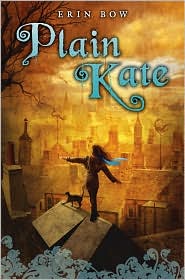
Erin Bow is the author of Plain Kate, a fantastic fantasy/magic adventure tale with a diverse cast of interesting characters. She also has an incredible talent with words, as you can see in her book as well as, much to my delight, this interview. Erin was gracious enough to answer some of my questions below. So welcome, Erin, to Steph Su Reads!
1. Your website describes PLAIN KATE as a "Russian-flavored historical fantasy." What sort of research went into the writing of this novel? What was the most interesting thing you did/discovered for research?
Research, even for an invented world like Kate's, is never ending. Fortunately most of it was library or internet research. I really owe the research librarians at the University of Waterloo a huge debt. The Society for Creative Anachronism helped out with a few sticky bits. I spent a couple of days hanging around a horse barn so that my horses wouldn't be too awful. And I learned enough about wood carving to make a small one with hurting myself. Much.
On the other hand, the middle of the novel takes place on a small punt, and my research into punting consisted (in its entirety) of rereading Three Men in a Boat. I fear it shows.
The hardest, weirdest, best research is always in the details. There are two things I learned that I really wanted to put in the story, but didn't fit: the first is that medieval woodcarvers used the skin of sharks as sand paper. Kate's too poor, so she uses a wet leather pad dipped in sand: what a pity! And I wanted to use the Hussar knights, whose armour included huge wings. But it turned out Kate's part of the world was a bit low-rent for them.
2. All of your works so far involve a lot of research. What drives you to tackle projects that require so much research in unfamiliar cultures?
Masochism?
I'd like to know that one, myself. In the first chapter of the book I just started, I created two lead characters from two different real historical cultures, who between them speak three languages I don't speak. YIKES.
I really don't know what draws me to these projects. I think it's that I like my fantasy worlds to feel big and well-lived in. My pet-peeve with high fantasy is that sometimes the setting feels like a setting for a stage: gorgeous, and about three inches deep. My pet-peeve with historicals is that sometimes they seem like the same old story with some feathers and human sacrifice glued on. There's no sense of language, culture, architecture, foodways, landscape, ecology, belief... it all just doesn't work.
Starting with a real setting helps me avoid that. It may be that I don't have the right kind of imagination to create a big, well-lived in world from scratch, a world like Middle Earth or Earthsea or Attolia or even Hogwarts. So, research it is.
(On a related note: I'm sick of everyone in fantasy being white. I'm aware that it's dicey for a white chick from Omaha to write about, say, Aztecs, but still....)
3. Yes, I agree with your answer big-time! So you used to work in physics--I love physics! What do you like about it? What was the best part about working at CERN?

You love physics? I'm so glad! People usually react as if I have trained a giant squid to follow me everywhere: you know, impressed, but somewhat wary.
I think what I like about physics is that you can ask questions that are so basic they are almost nonsense, such as, “why does a ball roll downhill?” I mean, yes, gravity, but the ball has potential energy at the top of the hill and kinetic energy at the bottom; why is the kinetic energy “better”? In high school I asked this and was told, “Well, gravity.” In college I asked it and was told about entropy and the second law of thermodynamics and the heat death of the universe. In grad school we started talking about the idea that there's no particular reason for the only-forward nature of time we experience as humans, and that the universe in most ways works just fine without that notion. Which is cool. I like the leap from simple-minded to astonishing. Poetry is like that too.
The best part of working at CERN was hanging out with a bunch of really smart people. That was fun! We all worked together, bounced ideas off each other, cooperated to get stuff done, spun ideas out over coffee and napkins. We also climbed mountains and formed bands and threw frisbees around. The Russians I worked with taught me to play cards and drink vodka (I never got good at either) and my roommate from Bombay taught me to cook Indian food. What's not to love? Besides the radiation, the rampant sexism, and the sixty- to eighty-hour work weeks, that is?
4. Linay, the "villain" of PLAIN KATE, turns out to be a marvelously complex character. Who are some of your favorite villains in YA literature, and why?
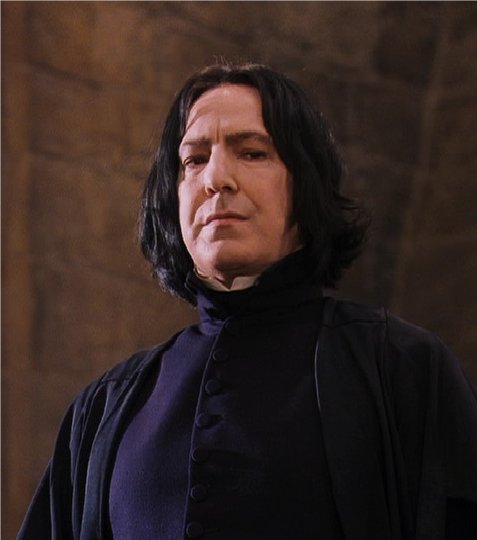
I just spent fifteen minutes starring at my bookshelf, trying to jog my memory. Before I did that I was going to say that I love villains, and always fall for villains. But I didn't come up with any villains that I loved. What I do like is, well, Snape: the villain on the side of light. Or, someone like Sherlock Holmes, the anti-social genius. Or the anti-hero. I just read The Demon's Lexicon, for instance, and Nick, the protagonist, is violent, cold, and difficult – for very good reason. I liked that.
What I like, in short (and in fiction) is people with baggage, people with damage, people who are a little bit crazy, a little bit off. They make good characters. I wish more people handled villains this way. I think there are very few people in real life who are cackling and twisting their moustaches, you know?
5. Can you tell us about how you reacted when you heard that PLAIN KATE had sold to Arthur Levine?
My experience is a little unusual, because my book went to auction, so I knew The Call was coming. Round Two Bids were due at 11:00 AM. Torturously, they didn't come in on time. They trickled in, and my agent refused to show them to me (wisely) until they were all ready. It was 7:00 PM before the last bid came. Meanwhile, I was at work, writing an article about the physical strengths of nanostructured films. I'm not sure it was a good article, mind you.
When Emily, my agent, finally called, it suddenly became clear that what had been a very good bid in the initial round one was now a shatteringly good, ditch your job, change your life bid. And it was from Arthur A. Levine. "Erin," said Emily, who had worked on the book with me for three years, "I have been dreaming about making this call for a long time." And then we both started to cry.
It's been wonderful to work with Arthur and his imprint and all the people at Scholastic, too. They've been a dream. I'm so grateful.
6. Taggle is totally endearing in his "cat-ness." I was wondering, who are your favorite literary felines?
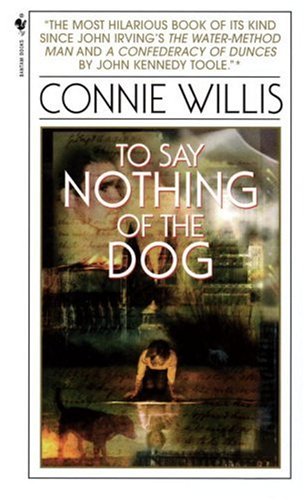
I love Princess Arjumand, the cat who nearly destroys the space-time continuum in To Say Nothing of the Dog. And there's Mogget from Sabriel, of course. People often compare Mogget and Taggle, but Mogget's most fascinating characteristic is that he isn't a cat, and Taggle's best quality is that he is a cat – who just happens to talk.
7. Favorite way to kick back and relax after a long and busy day?
Bath and a book, of course! Before kids, I was capable of spending the evening in the bathtub, reading an entire book and using all the hot water in the house. Sometimes these days words get to be too much, and then my hubby and I opt for video and popcorn. I love both good and bad science fiction. I'm a Doctor Who fangirl, for instance. And I love to rent movies like, say, The Core, and have some friends over and mock it until a beverage comes out of someone's nose. We actually have a travelling trophy for that.
8. What advice would you give to aspiring writers, especially those of whom, like you, also have seemingly unrelated interests and passions?
I wish I could tell young me: don't let anyone push you into picking a passion. Follow them all. Find a balance and let the balance shift as it needs to. Yes, this means you won't “get ahead” particularly fast, and it means people in both literature and physics will routinely look at you as if you have a duck on your head. But both are important to who you are. You will not regret following your passions, even if you follow them into dead ends.
For aspiring writers: write. It is difficult, and often stupid, and doesn't pay very well. Do it anyway. Start now. Read everything. Fill notebooks with stories or just with compost -- you'll need a lot of compost to grow a few good stories. Edit and make them as good as you can make them. Find someone to share them with -- a few someones, ideally. Other writers are good if you're not competing with them; they will Get It. In any case you need people you can both learn from and teach, people you can lean on and really trust. And then maybe think about publication. But even if you don't publish -- and many don't -- write. Because you want to. Out of love. Write, write, write.
-
Thank you, Erin, for that insightful and engaging interview! It's been a real treat for me. I hope you check out Erin's gorgeous written book, Plain Kate, if you can!
Showing posts with label erin bow. Show all posts
Tuesday, October 19, 2010
Monday, October 18, 2010
Review: Plain Kate by Erin Bow
Tags: YA, fantasy, adventure, magic, Russian folklore, woodcarving
Summary
Plain Kate’s life is forever changed when her carver father dies and she is left to her own resources. Plain Kate survives by carving pieces of wood into charms, but people are still wary of her tremendous carving skill. Rumors of her being a witch increase when a stranger by the name of Linay starts to pay attention to her. Running out of options, Plain Kate makes a deal with Linay: she will give him her shadow in exchange for provisions to leave her increasingly unfriendly town.
Armed with her carving knife, meager possessions, and a wry talking cat, Plain Kate joins up with a group of Roamers and tries to leave her past behind. However, magical troubles keep on following her and hurting those she cares about, and Plain Kate begins to realize that giving up her shadow, she may have gotten herself with magic much darker than anything she wanted…
Review
I am possibly the furthest from objectivity in reviewing this book, because epic, magically written fantasy adventure novels sweep me off my feet each and every time, leaving me drowning in my own puddle of envious, awed, and enraptured drool. PLAIN KATE channels the good old-fashioned writing of fantasy queens such as Robin McKinley to conjure up an astonishing world that flavorfully blends together folklore and magic, both in content and writing style.
Truth be told, I would’ve read this book solely for its language. Reading Erin Bow’s words is like reading a generations-old fairy tale, passed down from parent to child again and again. The book has a poetic soul at heart, and without the language, I’m pretty sure the magic of this story wouldn’t have been the same. I fell in love with the writing from the first page, and savored each paragraph of PLAIN KATE like I would decadent, heartwarming chocolate.
The plot doesn’t quite have the epicness that I adore in beautifully written fantasy adventures, but is enjoyable nonetheless. Like her name, Plain Kate is a no-nonsense girl: here is someone who has had to deal with loss and prejudice her whole life, and thus she doesn’t have time to waste on ambiguous hormonal teenage issues, which is almost refreshing in a YA book. Taggle, Plain Kate’s cat, adds much-needed humor breaks throughout the book, with his wry cat comments that anyone who has come in contact with cats before can most certainly relate to.
The story moves slowly, even as the characters travel far, preferring instead to spend time on the language rather than on specific physical action. The parts containing Linay and his sinister plans are a bit confusing—again, probably because I was, uh, too spellbound by the writing to get a solid hold on the story’s main magical conflict.
Despite that, I would read this book again and again, if only to savor Erin Bow’s words when I need a touch of beauty in my life. If you, like me, like falling under the spell of beautiful fantasy writing, then PLAIN KATE is a must-read. Kate’s story will make you fall in love with this genre all over again.
Similar Authors
Malinda Lo
Robin McKinley
Sarah Beth Durst
Writing: 5/5
Characters: 4/5
Plot: 3/5
Overall Rating: 4.5 out of 5
Cover discussion: 4 out of 5 - I love love love what the cover evokes: an otherworldly, almost historical fantasy feel. I just wish there was some of Kate's woodcarving in it.
Scholastic / Sept. 1, 2010 / Hardcover / 336pp. / $17.99
Review copy received from publisher.
Summary
Plain Kate’s life is forever changed when her carver father dies and she is left to her own resources. Plain Kate survives by carving pieces of wood into charms, but people are still wary of her tremendous carving skill. Rumors of her being a witch increase when a stranger by the name of Linay starts to pay attention to her. Running out of options, Plain Kate makes a deal with Linay: she will give him her shadow in exchange for provisions to leave her increasingly unfriendly town.
Armed with her carving knife, meager possessions, and a wry talking cat, Plain Kate joins up with a group of Roamers and tries to leave her past behind. However, magical troubles keep on following her and hurting those she cares about, and Plain Kate begins to realize that giving up her shadow, she may have gotten herself with magic much darker than anything she wanted…
Review
I am possibly the furthest from objectivity in reviewing this book, because epic, magically written fantasy adventure novels sweep me off my feet each and every time, leaving me drowning in my own puddle of envious, awed, and enraptured drool. PLAIN KATE channels the good old-fashioned writing of fantasy queens such as Robin McKinley to conjure up an astonishing world that flavorfully blends together folklore and magic, both in content and writing style.
Truth be told, I would’ve read this book solely for its language. Reading Erin Bow’s words is like reading a generations-old fairy tale, passed down from parent to child again and again. The book has a poetic soul at heart, and without the language, I’m pretty sure the magic of this story wouldn’t have been the same. I fell in love with the writing from the first page, and savored each paragraph of PLAIN KATE like I would decadent, heartwarming chocolate.
The plot doesn’t quite have the epicness that I adore in beautifully written fantasy adventures, but is enjoyable nonetheless. Like her name, Plain Kate is a no-nonsense girl: here is someone who has had to deal with loss and prejudice her whole life, and thus she doesn’t have time to waste on ambiguous hormonal teenage issues, which is almost refreshing in a YA book. Taggle, Plain Kate’s cat, adds much-needed humor breaks throughout the book, with his wry cat comments that anyone who has come in contact with cats before can most certainly relate to.
The story moves slowly, even as the characters travel far, preferring instead to spend time on the language rather than on specific physical action. The parts containing Linay and his sinister plans are a bit confusing—again, probably because I was, uh, too spellbound by the writing to get a solid hold on the story’s main magical conflict.
Despite that, I would read this book again and again, if only to savor Erin Bow’s words when I need a touch of beauty in my life. If you, like me, like falling under the spell of beautiful fantasy writing, then PLAIN KATE is a must-read. Kate’s story will make you fall in love with this genre all over again.
Similar Authors
Malinda Lo
Robin McKinley
Sarah Beth Durst
Writing: 5/5
Characters: 4/5
Plot: 3/5
Overall Rating: 4.5 out of 5
Cover discussion: 4 out of 5 - I love love love what the cover evokes: an otherworldly, almost historical fantasy feel. I just wish there was some of Kate's woodcarving in it.
Scholastic / Sept. 1, 2010 / Hardcover / 336pp. / $17.99
Review copy received from publisher.
Wednesday, April 14, 2010
Waiting on Wednesday (60)
Plain Kate by Erin Bow
Wow, this book sounds gorgeous! I don't read much historical fiction, but more and more I am a fan of a well-done historical fantasy, and this one seems to have all the right elements of history, magic, fantasy, danger, and romance. Can we get a sa-wooon here?
Plain Kate will be released in hardcover by Arthur A. Levine Books on September 1, 2010.
Plain Kate lives in a world of superstitions and curses, where a song can heal a wound and a shadow can work deep magic. As the wood-carver's daughter, Kate held a carving knife before a spoon, and her wooden charms are so fine that some even call her "witch-blade" -- a dangerous nickname in a town where witches are hunted and burned in the square.
For Kate and her village have fallen on hard times. Kate's father has died, leaving her alone in the world. And a mysterious fog now covers the countryside, ruining crops and spreading fear of hunger and sickness. The townspeople are looking for someone to blame, and their eyes have fallen on Kate.
Enter Linay, a stranger with a proposition: In exchange for her shadow, he'll give Kate the means to escape the town that seems set to burn her, and what's more, he'll grant her heart's wish. It's a chance for her to start over, to find a home, a family, a place to belong. But Kate soon realizes that she can't live shadowless forever -- and that Linay's designs are darker than she ever dreamed. [summary from Amazon]
Wow, this book sounds gorgeous! I don't read much historical fiction, but more and more I am a fan of a well-done historical fantasy, and this one seems to have all the right elements of history, magic, fantasy, danger, and romance. Can we get a sa-wooon here?
Plain Kate will be released in hardcover by Arthur A. Levine Books on September 1, 2010.
Subscribe to:
Posts (Atom)