World, I am at a loss for what to say or do. This article appeared on the Wall Street Journal website today, yet another in a neverending line of articles appearing in esteemed publications that condemn young adult literature. It says nothing new, really, just the usual bunch of accusations against the genre, namely that YA literature encourages the spread of dangerous activities such as sexual exploration, self-injury, anorexia, etc. The author, a Meghan Cox Gurdon, suggests that the proliferation of "dark YA" on the shelves these days creates adolescent with darker minds, impulses, and desires.
Articles like this one, of course, can't exist long in the world before the online YA community rises up to the occasion. Seriously, we're probably one of the most well organized informational armies out there. Twitter is like our right hand, and online communication reigns in the YA world because YA is still a not-very-widely accepted part of our culture that requires our "going underground," or "taking to the ethernets," to find "our people." YA authors, bloggers, librarians, publishing professionals, and more have been tweeting Wall Street Journal (@WSJ) nonstop. Libba Bray wrote an encore-deserving series of tweets that have been republished by WSJ as a "letter to the editor." And on and on and on.
Again, there's not much being said that hasn't been said before, so I want to focus on what I believe is the real "enemy" here: the attack on change and progress, and the lack of openmindedness.
Furors regarding YA-condemning articles and the online backlash from the YA community remind me of dramatic court or political scenes where representatives from both sides just kind of stand face-to-face and talk quickly and at the top of their lungs while stuffing their ears and singing "lalalalalalalalala" in their heads. Scenes like this drive me crazy not because of WHAT is being debated, but HOW it is being done. They talk and talk, and we talk and talk, and it seems like nothing has changed because the same arguments are being made every time on top of the fact that neither side is willing to actually listen to the other. No, each side is preoccupied with their belief of the "rightness" of their position, and even as they claim to be listening to the other side, they are in fact busily constructing counter-arguments for what they are "listening" to at that very moment. This is the nature of debate: you pick a side, and by all hell's fiery rivers, you stick to it, gosh darnit.
What we need is discourse, which is the meeting of the parties on an equal plane in which both parties are willing hear the other's points with an open and innovative mind, to compromise if needed, and to create something new out of what's already there. Debate doesn't create anything new because it's too busy standing its ground: there is one winner and one loser. But in discourse, the answer arises from something that has never been there before, and that, over debate, is how progress gets made.
Technically I am well past the age range in which reading YA is considered acceptable. But I have never felt like I have grown out of YA, just like some people have never felt like they needed or wanted to read YA. YA is still my preferred literary genre not because of the content of the books, or the books' messages, but because of how these subjects are approached. It's because YA is the state of mind in which I have experienced the most openmindedness, the most support for innovation and creativity and progress. I love the YA mindset because it's dramatic, because it's crazy and fun and wild and unpredictable and a little scary at times... because it is always, always, always open to and searching for new possibilities.
I have come to realize in the past year that there is really only one thing that I hate, in its myriad of manifestations: I hate willful ignorance, and closemindedness, and the determined denial to see things as black and white and dismiss even the possibility that things might be gray. What the hell is really black and white in this world, besides for a chess board and a zebra? Reducing things--anything, everything--to dichotomies is a small-minded, judgmental, and uninformed way of thinking, no matter how many education degrees you've earned or awards you've received. Years don't make maturity; the length of your CV doesn't denote your amount of wisdom. Maturity and wisdom is gained through the experiencing of life through clear and permeable lenses, of keeping your mind open to new ideas and of constantly adapting yourself to an everchanging world.
Sometimes I miss the old days, too. Every time I read L. M. Montgomery's Anne series, I can't help but think that life would be so wonderful if I could be Anne. But my wishing for that is the same as these YA lit condemners bemoaning the "loss of innocence" in adolescence these days: there's no use in trying to make something go back to the way it used to be. There is only going forward.
Articles like the WSJ one don't just attack YA literature: they also attack the intelligence of young adults and YA readers, the act of reading, and the very institution of education and learning itself. The article is an attack on progress above all. When I read an article such as this one, I'm offended on behalf of the YA community, but I'm also offended on behalf of the human race. The natural state of things is entropy: to try to force things to stay as they always were is unnatural and, ultimately, harmful. Everything is always taken to a whole other level when it deals with young people because growing up is the ultimate metaphor for change and progress. We want things to turn out one way, try to shape things so that they do, but things are always out of our control, always moving forward. No one helps a person with a broken leg heal by keeping him/her off his/her feet forever and ever; no, physical therapy is involved, the gentle guidance to let the muscles become aware of its own abilities to heal.
I am hopeful of things turning out alright for YA lit. Civil, women's, LGBT rights--it's been an uphill climb for all of these movements, but no matter how loudly the naysayers cry, the world knows that the natural order of things is change.
Showing posts with label YA lit issues. Show all posts
Showing posts with label YA lit issues. Show all posts
Saturday, June 4, 2011

Thursday, July 29, 2010
Why I Want More Asians on YA Book Covers: My Experience with Racism
 |
| AHAC.org |
I was in early middle school, 6th, 7th grade, maybe. My family had gone out to the all-you-can-eat buffet lunch at Pizza Hut with several other families. We were all close, due to similar cultural extracurricular activities and the same age range for the children. We kids chowed down our pizzas, breadsticks, and sodas, hungry rascals that we were, and began to get restless while the adults ate leisurely and chatted with one another. I pulled out a deck of cards and engaged some of the others in a game, but 52 cards is not enough to entertain 15 or so kids, and so inevitably there was lots of running, shouting, and being hyper kids at a pizza parlor.
So kids were running around and we were all in general making a lot of noises when one of the mothers caught some of the kids as they raced by the tables for the fifth or so time. "Settle down!" she ordered us in Chinese. "We're the minority, we have to be quiet!"
Now.
In her defense, rowdy kids in a restaurant should definitely be taught to be more considerate of other patrons and their surroundings, even in a family-oriented location.
Aaaaand that's about all I can say for her argument.
I was shocked. Seething with anger. Humiliated for my own race. Disappointed that someone so well educated, so well respected amongst our community, so looked up to by me and others, would say such a thing to kids, teach us, even unintentionally, that this sort of subservient inferiority thinking is acceptable. It's been probably 10 years since the incident, and my heart still clenches whenever I think of it, that day when I lost respect for someone I admired, that day someone--someone of my own race, no less--took my racial identity and slammed it in my face, pressuring me to conform to "acceptable" behavior and beliefs for my race.

But what we, over many other racial and ethnic groups, have acquired is a passive acceptance of the beliefs and treatment others subject us to. Many Asians do not have that much of a problem being considered the nerd-smart, obedient, socially awkward race. Better than being considered the hoodlum, or the troublemaker, or the good-for-nothing...right? It is, however, our own quiet acceptance of others' assumptions of what our race is like that ensures our position as a racial doormat.

I realize there are cultural discrepancies in these two mothers' different reactions to their disruptive kids. You know, East vs. West, collectivism vs. individualism, the sort of thing you study in psych, history, or soc-anth classes. But if we--and by "we" I don't mean just Asians, but everyone else in this whole damn world--continue to allow this racial self-policing to continue, then it's no wonder that white values continue to be considered superior, preferred. It's no wonder that Asians get pigeonholed into certain "types" of personalities and careers, and no wonder that some Asians' backlash to their own culture is so striking and self-hating. It's no wonder that Asian models get taken off the covers of Asian-set or Asian-themed books.
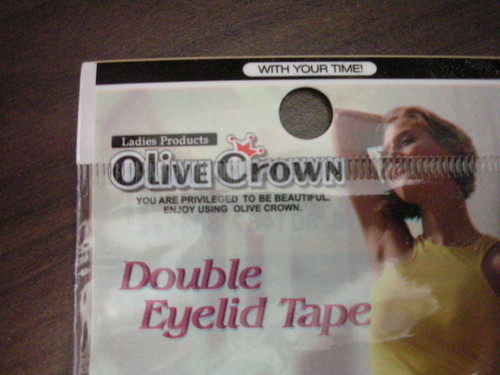 |
| I encourage you to click to enlarge this image so you can check out the words below "Olive Crown." |
And whereas you can walk into a school and see groups of black or Latina ladies expressing their pride at being black or Latina, you don't find the same with groups of Asian friends. Asian girls will typically flaunt their Asianness in a subconscious subjection to archaic Orientalist attitudes. Their thinking is, "I'm glad I'm Asian because I have great hair / age well / guys of all races think I'm cute." It's not, "I'm proud to be Asian for me and ME ALONE" the way black women can often say so about their race. Asians are constantly thinking of themselves in terms of other people. And yes, that's part of our Eastern culture as well, this attention to interpersonal connections as the primary way of validation of self, but that absolutely does not give other races and ethnicities the right to walk all over us.

Large chain bookstores would not buy Cindy Pon's Silver Phoenix because there was a proud Asian model in traditional Chinese garb on the cover. It's a beautiful, stunning, breath-taking cover, one that had me lusting after it for the fact that it had an Asian girl on the cover alone. Replacing the gorgeous, racially correct cover with a racially ambiguous, awkwardly posed and accessorized Darkest Powers trilogy lookalike offends me. It sends the message that being Asian and proud is not okay. By any standard of 21st-century human rights, is that an acceptable message to send to teenagers?

But to tell--directly or indirectly--an Asian teen that the only way he/she can have "fun," can be him- or herself, is by rejecting their Asian-ness and immersing themselves in white culture... that's plain offensive. It's inhumane.
Society--especially mostly white, American society--has made it an uphill battle for me to understand and embrace my Asian identity. As a teenager I think I would've died from happiness had there been more books with Asian characters and Asian cover models. In a world where popular media inevitably colors our perceptions of racial and ethnic acceptance, it is all the more important that something as trite ("don't judge a book by its cover") yet as monumental (covers are an important selling point for books) as book covers accurately and actively portray the truth about the world's diversity.

Let's not demean YA readers' intelligences, please. When we pick up a book with a POC character and see a model of a different race on the cover, we're not going to think, "Oh, YAY! Pretty, beautiful, consumer-happy-making cover!" We are going to think, "Um, hello, did the publishing house not read the book or something? Why is there a white person on the cover when the MC is clearly Asian/black/Latino/etc.?" We're not stupid. We're not unobservant. Give us more credit than that.
Let's have covers and stories that more accurately portray the wide range of beautiful, unique, talented, smart, funny, and, yes, weird people in our world. You want to continue to earn more money, industry people? You want people to continue to love reading, to continue to buy books? Then enter the 21st century and embrace CHANGE, like every single industry and organization out there needs to be doing. Cookie-cutter Wonderbreadland white characters and settings are no longer cutting it. Books should help expand our worldview, not stifle it. The 20th century was full of progress in the human rights field: integration of schools, businesses, and facilities; affirmative action; opening old and prestigious colleges and universities to women.
Let's not take steps backward now.



[Note: This post was inspired by Ari at Reading in Color, who wrote a frustratingly sad post about the Silver Phoenix cover change. Head over to her post to find more links to similar posts written by other bloggers.]
-
Readers: If you are comfortable doing so, please feel free to share your experience with racism either here or in your own post. I welcome your comments, whether you agree or disagree with me. I don't really care what the details of your own opinions on this issue are: it's more important that people talk about this in any degree, and continue talking about it.
Monday, April 26, 2010
What's Missing In YA Lit? The Contemporary Edition
One of the side effects of blogging, especially if you're blogging with being an aspiring writer in mind, is that you start to notice trends, of what's overdone, what's missing, things that worked for you, things that didn't.
Here are some things that I have found curiously absent in the contemporary YA books I've read, and would love to see more of:

1. Parents
This has been explored over and over again: notable essays on the topic are the April 1 New York Times article and the brilliant breakdown of parental archetypes by the First Novels Club. While I still generally do have problems with any time the NYT attempts to talk about YA lit (this one's not that ignorant or outdated, but the writer is still coming from the point of view of a rather hoity-toity "literary" adult. Can they get someone who actually knows what teenagers are thinking about, please?), it was still an interesting read. I'm not sure I agree with their point that problem parents are a literary norm at odds with society, but I do agree that more recent YA lit has lessened the impact of parents on teenagers' lives.
But still. Where are the parents? Why are 90% of parents either single, divorced, dead, workaholics, etc.? I understand that a little over 50% of married couples now divorce, but I'm also curious, because the writers of these problem parents are usually in stable, happy marriages themselves. (I read your acknowledgments page. Don't try to worm out of this one.) I think it's easy to exaggerate or categorize parents into flawed archetypes because that's the way teenagers think of their parents, for the most part. But it doesn't mean that the parents have to be truly awful people. The problem parent arises in the teenage protagonist's perception of his or her parents, not necessarily in the parents themselves. It's a subtle difference, but one that I would love to see explored more in YA lit.
Some favorite parents, or stories of parents: Audrey's hilarious parents in Robin Benway's Audrey, Wait! Sarah Dessen's parent-daughter relationships (I don't care if SD's parents have practically become an archetype in themselves, they're so well done in their ambiguity of who is right and who is wrong).

2. YA lit
Where's the YA lit in YA lit? Most of us like to read about characters that we can relate to in some way or another. We readers read tons of YA, but have you ever noticed how little YA the characters in YA books actually read? When literature is brought up, it's usually classics (Bella's love of Austen and Bronte in Twilight), YA classics (Judy Blume's Forever plays a central role in Tanya Lee Stone's A Bad Boy Can Be Good for a Girl), or conspicuously obscure translations of European philosophers' works (I can't even give an example for this one). How cool would it be to read about a girl who reads the same type of stuff we do? If authors refer to one another within their own texts? I think it'd be absolutely fantastic if an MC read, say, the Mortal Instruments trilogy, or, for a more unisex taste, if the MC and the love interest got into a (spoiler-free, of course) discussion about The Hunger Games. Can you see that happening?
If you're worried about contemporary YA literary references dating a work, keep in mind that so many authors like to have their characters interested in pop culture, or have a particular taste in indie music. What's so different if characters were YA bookworms? I'd totally be up for that. The same way zillions of readers have picked up Pride and Prejudice, Wuthering Heights, and Romeo and Juliet from Bella Swan's love for them (and thanks to HarperTeen's exceedingly Twilight-y rejacketed reprints), or the same way I sometimes take music recommendations from book characters, I'd love to take book recommendations from characters as well. If we YAers are constantly working towards and fighting for YA lit's acceptance as "real literature" in today's society, shouldn't YA characters be a model YA bookworm?
YA books that contain YA lit: Lindsay Eland's Scones and Sensibility, which, alright, deals with two classics (Pride and Prejudice and Anne of Green Gables), but I loved how her obsession with those two drove her character. Aaaaaand I can't think of any more.
3. Homework
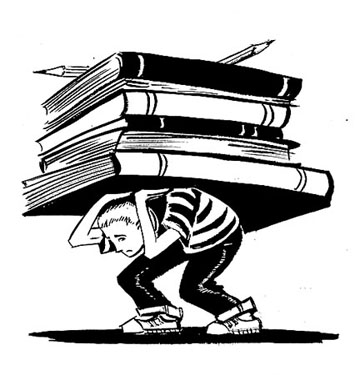
This is similar to the topic before this. Why, why, why do characters never have to do homework? They can be in 3 APs, 4 Honors classes, and get into some swankified Ivy League school... and yet we never see them hard at work. Instead, they spend 3-6pm at the mall, commiserating with their best friend over the guy who broke her heart over the past weekend's party. Then, when they go home, they go online, chat with their crush. Freak out. Call BFF for support and in-depth analysis of IMs. Get in bed by 10.
In bed by 10? And you're able to get into an Ivy League school? Excuse me, but from personal experience, that's impossible. For me, getting to sleep by midnight was a real miracle. There is no way an Honors student can get 8 hours of sleep every night and still get into said swankified colleges without a significant portion of their life dedicated to schoolwork and extracurricular activities. Sad but true. (And no, you cannot get into a top-tier college on grades alone. Just ask any Honors student.) I enjoy the drama the MCs face, and the conversations they have with their best friends, and the hours upon hours they can spend on spontaneous road trips with their crushes or whatever. It just...can't happen.
I know, I know that we don't read fiction to get a play-by-play of reality, but I still think it'd be nice to have hints of heavy loads of homework, all-nighters, baggy eyes, and canceled plans due to academics in YA lit.
Books with realistic portrayals of academics: Robin Brande's Fat Cat. Cat spends lots of time working on her science project. Granted, it's what drives the plot of the novel, but you can see telltale signs of her intelligence (in the effortlessness of her narration) and hard work (late nights are mentioned).
Speaking of which...

4. An ACCURATE portrayal of the college application process
Here are some basic facts: the Early Decision deadline (for academically competitive colleges, which are what many characters aim for and, miraculously, all get into) is between Nov. 1-15, notification date is a few days after Dec. 15. Early Decision means it's binding: the character can't decide to change his/her mind without financial ramifications. Regular Decision deadline is between Dec. 31-Jan. 2. And no, academically competitive colleges (like Dartmouth) will not accept--and admit--applicants after the deadline *coughBellaSwancough*. RD notifications come between mid-March and mid-April; by May 1, you have to have made your decision. Also, IVY LEAGUE SCHOOLS (and D2 and D3 schools) DON'T GIVE OUT ACADEMIC OR ATHLETIC SCHOLARSHIPS.
So can we not have characters still applying to, like, Columbia or Brown in February? Or finding out, belatedly, that they had gotten into their dream school, after everyone else has had to turn in their college decisions? Or getting a full-ride soccer scholarship to Harvard? Maybe this is a small pet peeve of mine, but the college application process quite literally sucks away all the time and energy that many academically competitive high school students have, and authors making careless mistakes such as these really puts a brake to the whole "I can relate to YA lit because I'm going through what they're going through" symbiotic relationship we want between the books and the readers.
I'd also love to read about characters going through the entirety of the college application process. It doesn't have to be a book about applying to college, but the process is such a huge part of a high school senior's life that to not talk about it in books is really to disrespect all the work that teenagers have put in to get to this point in their lives.
Books: I can think of books that show parts of the process, but none that actually get it right, unfortunately.
Books: I can think of books that show parts of the process, but none that actually get it right, unfortunately.
5. Realistic romances
I really don't want to read yet another contemporary YA book in which the shy protagonist, so full of inner turmoil is she, is suddenly pursued by a super-confident, super-cute, and super-persistent boy who *gasp* turns out to have had his eye on her for years. Can we pause for a moment here and consider how often that really happens in real life? I asked some of my friends, and, surprisingly I guess, the majority of them who are in relationships had initiated contact themselves. You heard that right. Today's women are more assertive in romance than today's men.
Now, I know that reading fiction is mostly wish fulfillment. But it can also be partly educational. Maybe I shouldn't be doing this, but when I'm really confused about life, or social situations, I sometimes try to think back on the stories I read, to see how characters in situations similar to mine had reacted. With romance, there are so few assertive female protagonists to look up to it's rather shocking. We'd all love to be the reserved and unassuming girl whose love of her life suddenly approaches her and is all, sweetheart, I've loved you for years, and I love you just the way you are, awkwardness, shyness, quirks, and all. But the probability of that happening to us? Slim to none. And not because we're extremely unlikable, but because today's love or lust doesn't work like that.
Books: I'm tired.

6. Athletes
This topic actually came up at a YA panel with Catherine Gilbert Murdock, Beth Kephart, and Rita Williams-Garcia that I attended at the Philly Book Festival a couple weekends ago. Someone told Catherine that she had heard that publishers were not very willing to publish books about athletes, especially female athletes. I'm not sure where the lady had gotten her info, and I certainly hope that publishers don't feel that way, because I personally love characters who are athletes. I don't think this is as big of an issue as the others on this list, but I enjoy how books featuring athletes do not have to be sport books, y'know?
Though I would like to see some more actual athletic action: mentions or recaps of games, practice, interactions with teammates, bus rides, the like. Basically, I'd love if YA's approach to sports (part of a character's identity, but doesn't define him/her) could be extended to other aspects of YA lit, such as race, ethnicity, sexual orientation, introvertedness, mental illness... the list goes on and on.
Athletes in books: Josie in Natasha Friend's For Keeps (varsity soccer). D.J. Schwenk in Catherine Gilbert Murdock's Dairy Queen series (super-awesome basketball player, not so great mental player).

7. Acne (and other physical "uncomfortableness")
AudryT on Twitter suggested this to me, and I wholeheartedly agree (and am appalled that this slipped my mind initially). If acne is such a common teen nightmare, why do so many books make it a point to note characters' (particularly the MC's) clear, model-worthy skin? If the average woman is a size 14, why do more than 90% of all MCs I come across complain about their boyish figure, the way their fast metabolism makes it so that they can never put on the weight they want? Also, why do 5'6" MCs weigh only 105 pounds? Is that healthy? [ETA: So I'm not going to look up a BMI chart, but my main point is that I'd also like for there to be 5'6" MCs who weigh, say, closer to 130. Get the spectrum of body types.] I'm 5'4", size 4, and weigh far from 105 pounds. Also, I had (have) acne. Put on some muscles, girls!
I realize that teenagers are supposed to hate their bodies, no matter if your body type is the envy of someone else. But I'd love to see, say, heavier teens. Or, teens with bad skin. A lazy eye. A limp. A hearing device. An amputated leg. There are these teens out there (and bad skin and size 10 bodies are not that rare), and they (or we, in some cases) shouldn't have to feel as if they/we can't find themselves/ourselves in books.
Books: Carolyn Mackler's Love and Other Four-Letter Words. The MC's best friend in NYC does not have perfect skin. The MC in Beth Fantaskey's Jessica's Guide to Dating on the Dark Side is a size 10.

8. Characters whose differences don't identify them
The girl can be on the larger side, but it's not a book about obesity. The boy plays football, but it's not a sports book. A book with a black protagonist is not labeled as "ethnic" literature. A gay teen doesn't make a book GLBTQ lit. It's 2010: the world is a lot more diverse than literature gives it credit for. I find myself almost subconsciously looking for racial and ethnic diversity in the characters in a book. For example, are you really going to have only white, upper-middle-class friends? Protagonists don't have to be white to be understood by readers; "white" is not a default race. Having a white MC doesn't signify the MC's "lack of race": it simply means that the parameters of his/her race are normalized as to be "invisible" in society.
There's a curious disjuncture between YA and adult POC. In adult literature, POC characters are often celebrated, considered a huge accomplishment by the author in "convincingly embodying" the character's voice. Just check out an NYT bestselling list or something. Or recent books that have a good chance of being a "modern classic." In adult lit, POC is IN. Whereas in YA lit, there is still an unbalanced ratio of non-POC to POC characters. Here's to hoping for more POC "non-issue" books, and less segregation of books into "issue" (body image, self-esteem, family troubles, abuse, gang activity, etc.) and "non-issue" (light, fluffy, romance happily-ever-after, biggest problem is best friend not speaking to you).
Books: Nina Beck's This Book Isn't Fat, It's Fabulous. Justine Larbalestier's Liar.
-
I'm going to stop with the in-depth analysis here, but a quick survey on Twitter showed that this is far from a complete list. I could go on about the ones below, but I'm just going to list them quickly. Many thanks to my Twitter friends for helping add to this list, especially Carol, who said, like, half of these. :)
- Well-rounded cheerleaders and jocks - because bitchy cheerleaders and asshole jocks aren't the only types out there
- A best friend-less MC who's NOT a social leper - because I didn't (and still don't) have a BFF, and it's not because the world is unfair and I was wrongly accused of something-or-other
- Socioeconomic diversity - because I read Holly Hoxter's The Snowball Effect and realized how often books featuring blue-collar characters are often still classified as "problem novels"
- Realistic IMing/texting shorthand - U R tryin 2 hrd if U wryt lyk dis. Pls stop kthxbye.
- Male MCs - because a lot of YA readers like boys, and boy narrators are hot, and besides, we want to try to understand how their minds work
Got anything else you'd like to see more of in contemporary YA lit? How about paranormal? (For the Paranormal Edition) Or other genres? (for potential Other Editions) I want to hear them!
Tuesday, February 23, 2010
Magic Under Glass' New Cover!
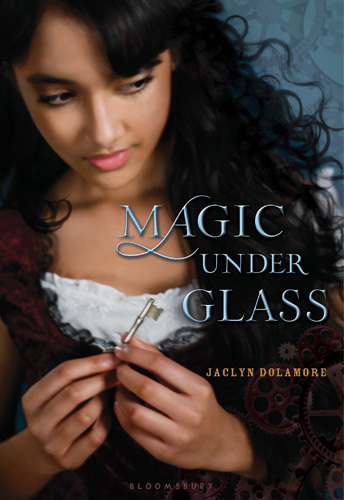
I was, sadly, silent while the blogosphere and Internet was all abuzz a few weeks ago with the white-washing cover controversary surrounding Jaclyn Dolamore's debut novel, Magic Under Glass. (It was due mostly to schoolwork.) However, the new Magic Under Glass cover has been popping up now, and here it is:

Yeah, I couldn't find a bigger picture of it. Sorry! Now compare it with the original cover:

Isn't the new cover gorgeous? I really don't understand why Bloomsbury didn't just do the second cover first. While I admit that I like the lighting of the old cover, and think it would look very lovely on another book, the new one looks, on the one hand, much more professional. I mean, what was up with Number One's Photoshopped-floating-shadow translucent-title overlay? Hello?! Anyway, I digress.
Last year, I wrote a blog post about how I felt the new cover of Justine Larbalestier's Liar (changed, once again, after media outcry about its whitewashing) was...pretty, but had not gone far enough to correct the decades-old issue of whitewashing on covers. For reference, here is the cover of Liar again:

My issue with this image is that it's just too pretty, too unlike the author's descriptions of Micah in the book, too acquiescent to the majority (read: white) ideal of beauty. Because honestly? How many black girls look like this model? (How many girls of any other race, for that matter?) The supermodel-worthiness of the model, along with the "stillness" of the cover, left me dissatisfied and feeling that Bloomsbury had not done enough. No, far from it: they had simply gave themselves a lightly reprimanding slap on the wrists, and put the white majority's idealized version of black beauty on the cover.
This time, however, I think Bloomsbury's on a better track.
I'm still not completely satisfied, of course. There's still a "staticness" about these covers, a sluggishness, that conveys little movement for stories that are wide and sweeping and what have you. But I'm super happy they didn't put the teenage equivalent of Freida Pinto (Latika from Slumdog Millionaire) on the cover:

Or Aishwarya Rai (from Bride and Prejudice):

Because--do you see what I'm trying to depict here? There's no denying that Freida and Aishwarya are stunning. I don't care what race you are, or what your sexual orientation is, but there's almost no way you can NOT think either one of these ladies beautiful. Their beauty transcends almost impenetrable racial boundaries and appeals to the societal ideal of beauty.
That's why I'm much happier with the improved cover for Magic Under Glass than I was for that of Liar. On the cover of MUG is now a girl who could be my classmate, or my good friend back in high school. She's pretty too--but her beauty is so much more grounded in reality. I don't feel like a freaking ugly loser when I inevitably subconsciously compare myself to the cover of a book anymore. Like it or not, book covers do influence our impressions of a book, and now the good thing is that I can eagerly pick this book up in the store now and be allowed to think, I could be her. She could be me. I can be as brave and resourceful and beloved as she is.
And that, my friends, is an EXCELLENT thing for readers to think and feel.
So by all means, go out there and recommend this book like crazy. I bet there will be grateful girls out there, girls who are happy that finally, finally there's someone like them on the cover of a book: someone flawed, someone different, and someone amazing in their uniqueness and differences. This is one small step towards expanding society's standards of beauty, towards lowering teenage girls' insecurities over their appearances because they don't look like the only faces they see in prominent media positions. And that is a very beautiful thing.
So thank you, Bloomsbury, for this small gift. But you know what they say about the third time. Don't mess up again.
I leave you with the new MUG cover again. So you can bask in it, as I am.

Yeah, I couldn't find a bigger picture of it. Sorry! Now compare it with the original cover:

Isn't the new cover gorgeous? I really don't understand why Bloomsbury didn't just do the second cover first. While I admit that I like the lighting of the old cover, and think it would look very lovely on another book, the new one looks, on the one hand, much more professional. I mean, what was up with Number One's Photoshopped-floating-shadow translucent-title overlay? Hello?! Anyway, I digress.
Last year, I wrote a blog post about how I felt the new cover of Justine Larbalestier's Liar (changed, once again, after media outcry about its whitewashing) was...pretty, but had not gone far enough to correct the decades-old issue of whitewashing on covers. For reference, here is the cover of Liar again:
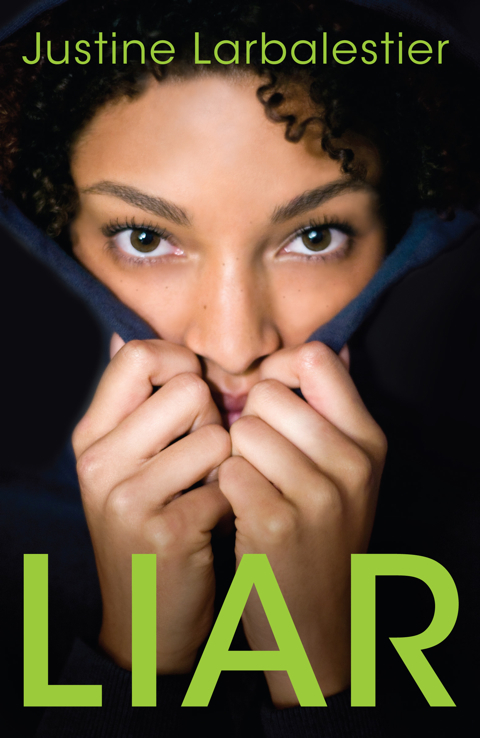
My issue with this image is that it's just too pretty, too unlike the author's descriptions of Micah in the book, too acquiescent to the majority (read: white) ideal of beauty. Because honestly? How many black girls look like this model? (How many girls of any other race, for that matter?) The supermodel-worthiness of the model, along with the "stillness" of the cover, left me dissatisfied and feeling that Bloomsbury had not done enough. No, far from it: they had simply gave themselves a lightly reprimanding slap on the wrists, and put the white majority's idealized version of black beauty on the cover.
This time, however, I think Bloomsbury's on a better track.
I'm still not completely satisfied, of course. There's still a "staticness" about these covers, a sluggishness, that conveys little movement for stories that are wide and sweeping and what have you. But I'm super happy they didn't put the teenage equivalent of Freida Pinto (Latika from Slumdog Millionaire) on the cover:

Or Aishwarya Rai (from Bride and Prejudice):

Because--do you see what I'm trying to depict here? There's no denying that Freida and Aishwarya are stunning. I don't care what race you are, or what your sexual orientation is, but there's almost no way you can NOT think either one of these ladies beautiful. Their beauty transcends almost impenetrable racial boundaries and appeals to the societal ideal of beauty.
That's why I'm much happier with the improved cover for Magic Under Glass than I was for that of Liar. On the cover of MUG is now a girl who could be my classmate, or my good friend back in high school. She's pretty too--but her beauty is so much more grounded in reality. I don't feel like a freaking ugly loser when I inevitably subconsciously compare myself to the cover of a book anymore. Like it or not, book covers do influence our impressions of a book, and now the good thing is that I can eagerly pick this book up in the store now and be allowed to think, I could be her. She could be me. I can be as brave and resourceful and beloved as she is.
And that, my friends, is an EXCELLENT thing for readers to think and feel.
So by all means, go out there and recommend this book like crazy. I bet there will be grateful girls out there, girls who are happy that finally, finally there's someone like them on the cover of a book: someone flawed, someone different, and someone amazing in their uniqueness and differences. This is one small step towards expanding society's standards of beauty, towards lowering teenage girls' insecurities over their appearances because they don't look like the only faces they see in prominent media positions. And that is a very beautiful thing.
So thank you, Bloomsbury, for this small gift. But you know what they say about the third time. Don't mess up again.
I leave you with the new MUG cover again. So you can bask in it, as I am.
Wheeeee look at me! I'm real and unique and therefore I am beautiful!!!
Subscribe to:
Posts (Atom)